What Is a Protein Shake? A Complete Beginner’s Guide
What is a protein shake? It is a convenient drink made by mixing protein powder with water, milk or other ingredients to increase your daily protein intake.
Walk into any gym and you’ll see them plastic bottles with a rattling ball inside, chocolate coloured liquid, someone gulping it down before they’ve even wiped the bench. Scroll social media and it’s the same story everyone seems to be drinking a protein shake, and everyone seems to assume you already know why.
Nobody actually explains it.
So let’s fix that. This guide covers what a protein shake is, what’s inside it, whether you need one, and how to use it without wasting money or upsetting your stomach. No brand pitch at the end. Just the stuff you’d want a friend who knows nutrition to tell you.
What Is a Protein Shake, Exactly?
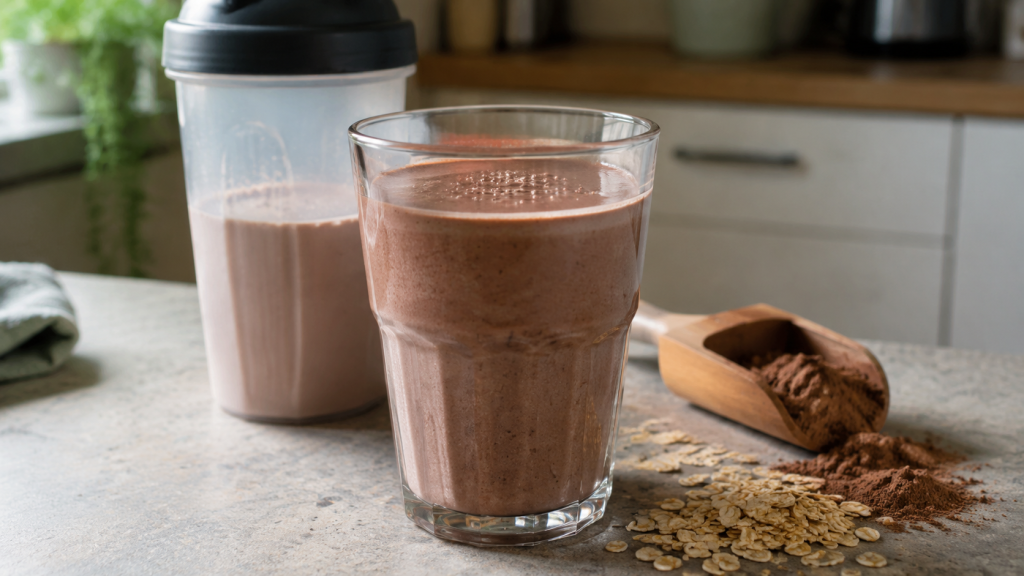
A protein shake is a drink made by mixing protein powder with a liquid usually water, milk, or a milk alternative like almond or oat milk. That’s it. That’s the whole concept.
The powder is a dietary supplement made by extracting protein from a food source (milk, peas, soybeans, eggs) and drying it into a concentrated form. One serving typically delivers somewhere between 20 and 30 grams of protein, which is roughly what you’d get from a chicken breast or four eggs except it takes thirty seconds and doesn’t need a pan.
Protein itself is one of three macronutrients, alongside carbohydrates and fats. It’s built from amino acids, which your body uses for muscle repair, tissue repair, immune function, hormone production, and basically every structural job in the body your hair, nails, skin, bones and organs all depend on it.
Protein Shake vs. Smoothie vs. Meal Replacement vs. RTD
These four terms get used interchangeably, and they shouldn’t be.
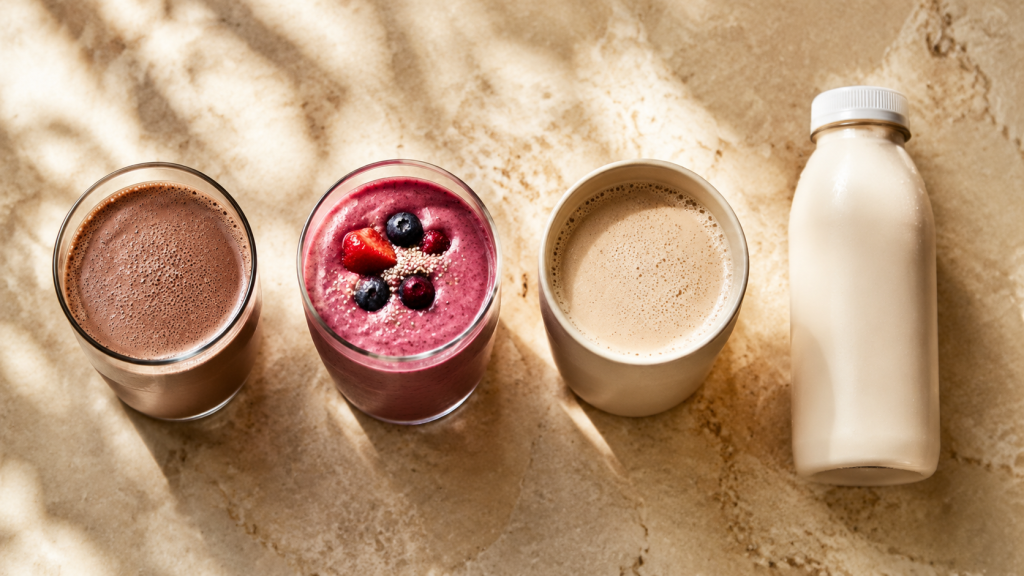
- Protein shake powder plus liquid. Low carbohydrates, low fats, high protein.
- Protein smoothie the same thing with fruit, yogurt or juice blended in. More calories, more carbohydrates, more fiber, and often more added sugar than people realise.
- Meal replacement deliberately formulated to stand in for a full meal, so it carries added vitamins, minerals and usually more calories.
- Ready-to-drink (RTD) the pre-mixed bottles sold in shops. Convenient, but frequently loaded with added sugar, artificial sweeteners or thickeners that a plain powder wouldn’t contain.
If someone tells you their protein shake has 400 calories, they’re almost certainly describing a smoothie.
What’s Actually Inside the Tub
Flip a container over and you’ll usually find
- A protein source (whey, casein, pea protein, soy protein, etc.)
- A sweetener either stevia, monk fruit, or artificial sweeteners like sucralose and aspartame
- Flavouring and cocoa or vanilla
- An emulsifier such as sunflower or soy lecithin, which stops clumping
- Sometimes vitamins, minerals, digestive enzymes or added BCAAs
- Occasionally fillers, gums, or maltodextrin which is where quality starts to slide
The ingredient list is ordered by quantity. If the protein source isn’t first, something has gone wrong.
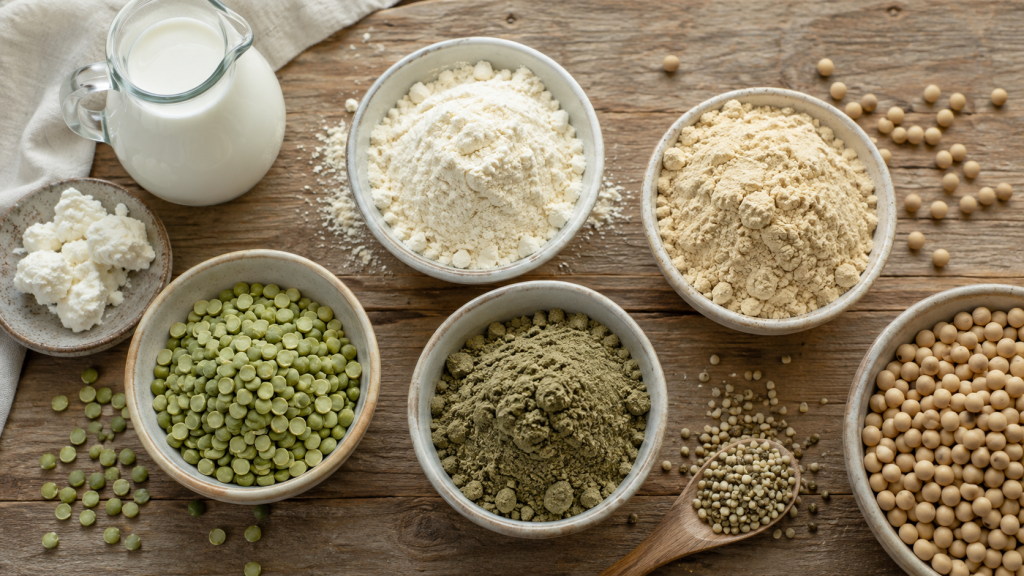
The Main Types of Protein Powder
The single biggest source of confusion for beginners is the wall of options. Here’s the short version.
| Type | Source | Digests | Complete Protein? | Best suited to |
|---|---|---|---|---|
| Whey concentrate | Milk | Fast | Yes | General use, budget-friendly |
| Whey isolate | Milk | Fast | Yes | Lactose intolerance, lean goals |
| Casein | Milk | Slow | Yes | Evening use, longer satiety |
| Soy protein | Soybeans | Moderate | Yes | Vegans, dairy-free |
| Pea protein | Yellow split peas | Moderate | Nearly | Vegans, dairy or soy allergy |
| Hemp protein | Hemp seeds | Slow | No | Extra fiber and omega-3s |
| Brown rice protein | Rice | Moderate | No | Hypoallergenic blends |
| Egg white protein | Eggs | Moderate | Yes | Dairy-free, animal-sourced |
| Collagen | Animal connective tissue | Moderate | No | Skin, joints not muscle-building |
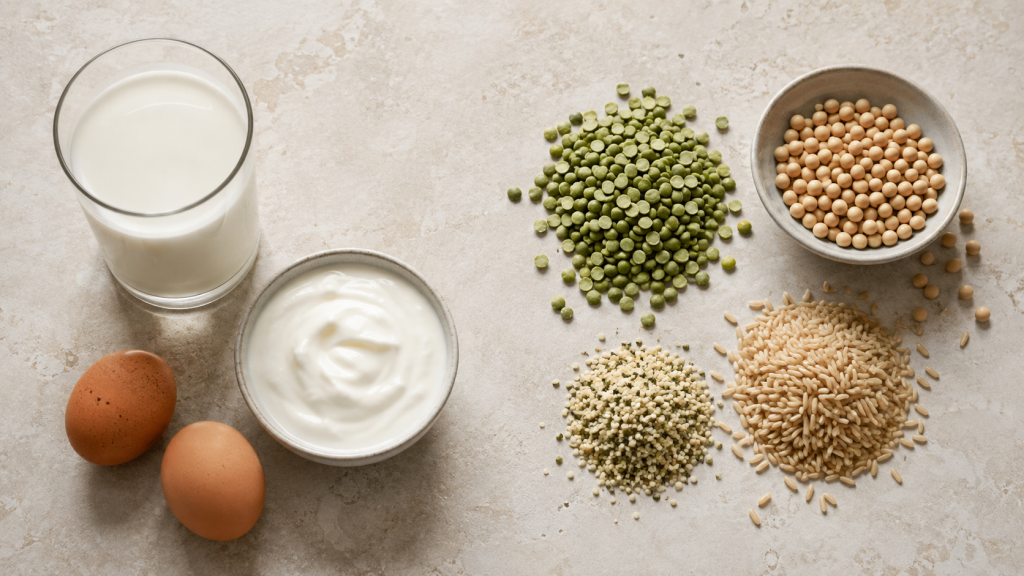
Dairy-Based Whey and Casein
Whey protein is the most widely sold protein supplement on earth. It’s separated from milk during cheesemaking, and it’s a complete protein meaning it contains all nine essential amino acids your body can’t manufacture on its own. It’s also high in leucine, the specific amino acid that acts as the trigger switch for muscle protein synthesis.
Whey protein concentrate is the standard, cheaper form and retains a little lactose and fat. Whey protein isolate is filtered further higher protein percentage, almost no lactose, which makes it a genuine option if dairy normally causes you bloating or gas.
Casein is the other milk protein. It forms a gel in the stomach and releases amino acids slowly over several hours, which is why people take it at night to limit muscle breakdown overnight. It’s thicker, slightly grainier, and noticeably more filling.
Plant-Based: Pea, Soy, Rice and Hemp
Plant-based protein has come a long way. Soy protein is the standout it’s a complete protein with an amino acid profile close to animal sources, and research supports it for muscle growth. Pea protein is easily digestible, high in iron, and low-allergen; it’s slightly short on methionine, which is why manufacturers often pair it with brown rice protein to round out the profile.
Hemp protein brings fiber and essential fatty acids but has a gritty texture and lower protein density it works better blended into something thick than shaken with water.
If you’re vegan or vegetarian, a blend is usually the smarter buy over a single plant source.
Egg White and Collagen
Egg white protein is a complete protein with excellent digestibility a solid dairy-free, animal-sourced option that’s simply less common on shelves. Collagen protein is popular but frequently misunderstood it’s an incomplete protein, low in leucine, and not the right tool if your goal is muscle mass.
What a Protein Shake Actually Does in Your Body
When you finish a session of resistance training, you’ve created micro-tears in your muscle fibers. This is normal it’s the stimulus that makes you stronger. Your body shifts from a catabolic state (breaking tissue down) toward an anabolic state (rebuilding it), and it needs amino acids as raw material.
A protein shake delivers those amino acids fast. Whey in particular raises blood amino acid levels quickly, which elevates muscle protein synthesis the process that repairs and adds lean muscle.
Beyond the gym, protein does a few other useful things
- Satiety. Protein takes longer to digest than carbohydrates, so it keeps you feeling full. That’s why a shake between meals can stop the 3 p.m. snack spiral.
- Thermic effect of food. Your body burns more calories digesting protein than it does digesting fat or carbs, giving a small nudge to metabolism.
- Blood sugar. Protein alongside carbs blunts sharp rises and crashes, which many people notice as steadier energy.
- Preserving muscle in a calorie deficit. When you eat less to lose fat, adequate protein helps you lose fat rather than lean muscle.
- Countering sarcopenia. Adults over 65 lose muscle with age and generally need more protein not less to hold onto it.
What it doesn’t do build muscle on its own. Without strength training, extra protein is just extra calories.
How Much Protein Do You Actually Need?
This is where most articles get vague, so here are the actual numbers from the American College of Sports Medicine and the Academy of Nutrition and Dietetics
- Sedentary adults roughly 0.8 g of protein per kilogram of body weight per day (the RDA a floor, not a target)
- Recreational athletes: about 1.1–1.4 g/kg
- Training to build muscle: roughly 1.5–2.0 g/kg
- Adults over 65: around 1.2–2.0 g/kg to protect muscle mass
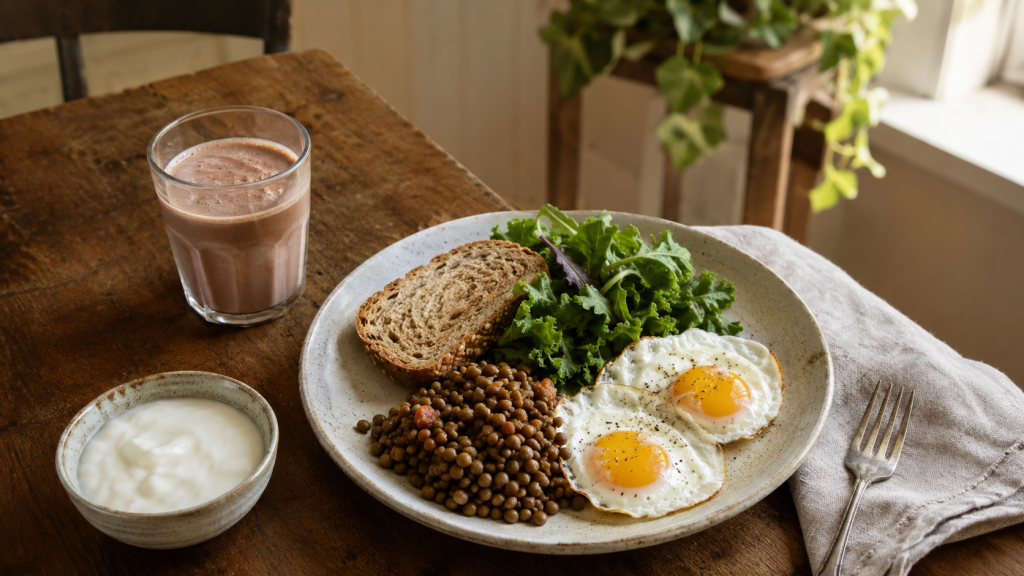
A worked example, because grams per kilogram is annoying to picture. If you weigh 70 kg and lift three times a week, you’re aiming for roughly 100–140 g of protein a day. Two eggs and toast is about 15 g. A chicken breast is about 30 g. A cup of Greek yogurt is about 20 g. Add a protein shake at 25 g and the target stops looking impossible.
Most people in developed countries already hit the RDA through ordinary meals. The gap tends to appear when you start training seriously, cut calories, or follow a plant-based diet.
If you have kidney disease or any existing medical condition, talk to a doctor or registered dietitian before increasing protein significantly. For healthy kidneys, research hasn’t found harm from high intakes but healthy kidneys is the operating assumption there.
Do You Even Need a Protein Shake?
Honest answer possibly not.
A protein shake is a convenience product, not a health requirement. If you eat whole foods with decent protein meat, fish, eggs, dairy, tofu, lentils, beans and you’re comfortably hitting your daily protein target, a shake adds nothing your diet is missing.
It earns its place when
- You’re consistently falling short of your target and struggling to close the gap with food
- You train early or late and can’t face a full meal around your session
- You’re vegan or vegetarian and finding complete protein sources awkward to hit
- You’re over 65 and appetite has dropped
- You’re recovering from injury or surgery and need extra protein for wound healing
- You’re on a GLP-1 medication and eating less overall, which makes protein preservation important
- Your mornings are genuinely too rushed to eat
Shakes are a supplement in the literal sense they supplement. Whole foods carry fiber, vitamins, minerals and compounds no powder replicates, so most dietitians suggest capping shakes at one or two a day and building the rest of your intake from meals.
When to Drink One and Why Timing Is Oversold
For years the advice was rigid drink your shake within thirty minutes of training or you’ve wasted the session. That’s the anabolic window, and the supplement industry loved it.
The current evidence is far more relaxed. Meta-analyses comparing pre-workout and post-workout protein have found no dramatic difference in outcomes. The muscle-building response to training stays elevated for many hours afterward, and what matters most is your total daily protein intake, not the stopwatch.
That said, some timing patterns are genuinely useful
- After training a reasonable habit, easy to remember, and comfortable when you don’t feel like a meal
- Morning helps front-load protein and reduces cravings later in the day
- Before bed casein digests slowly, supporting overnight muscle recovery
- Between meals a shake works well in place of a snack
Research on distribution suggests spreading protein across the day roughly 20–30 g per meal is more effective than one enormous serving. Drink it whenever it helps you hit your number consistently. Consistency beats precision here, every time.
How to Make Your First Protein Shake
The basics, then the upgrades.
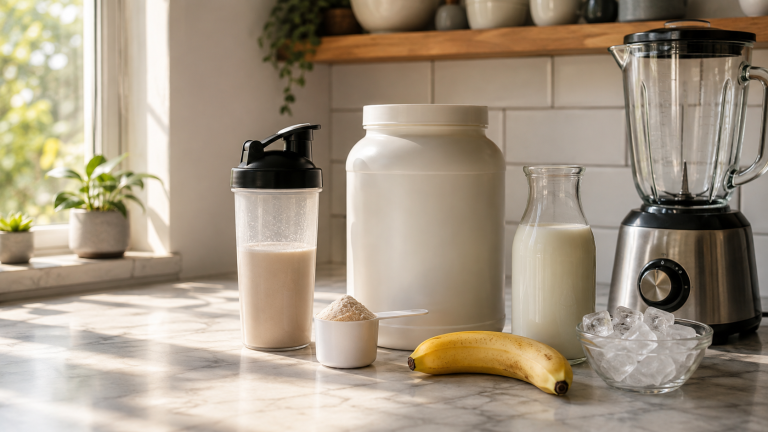
The standard version one scoop of powder, 250–300 ml of liquid, shaken in a shaker bottle for 20 seconds.
Liquid first, powder second. This is the single fix for clumping. Powder dumped into an empty bottle cakes at the bottom and never fully dissolves. Add your water or milk, then the scoop, then shake.
Water vs. milk. Water keeps calories low and produces a thinner drink. Milk adds roughly 100–130 calories, extra protein, and a much creamier texture. Almond and oat milk sit in between.
If you’re using casein or hemp, use a blender rather than a shaker both are thicker and resist mixing.
Once you’re comfortable, you can build it out
- Frozen banana or berries for flavour and fiber
- A tablespoon of peanut or almond butter for healthy fats
- A handful of spinach you genuinely can’t taste it
- Oats to turn it into breakfast
- Cinnamon or cocoa powder to fix a bland flavour
- Ice, which makes almost any shake noticeably better
You can also cook with it stirred into oatmeal, folded into Greek yogurt, mixed into pancake batter, or blitzed into a smoothie bowl.
How to Read a Protein Powder Label Without Getting Fooled

Here’s the part the big health sites skip and the supplement brands can’t be trusted on.
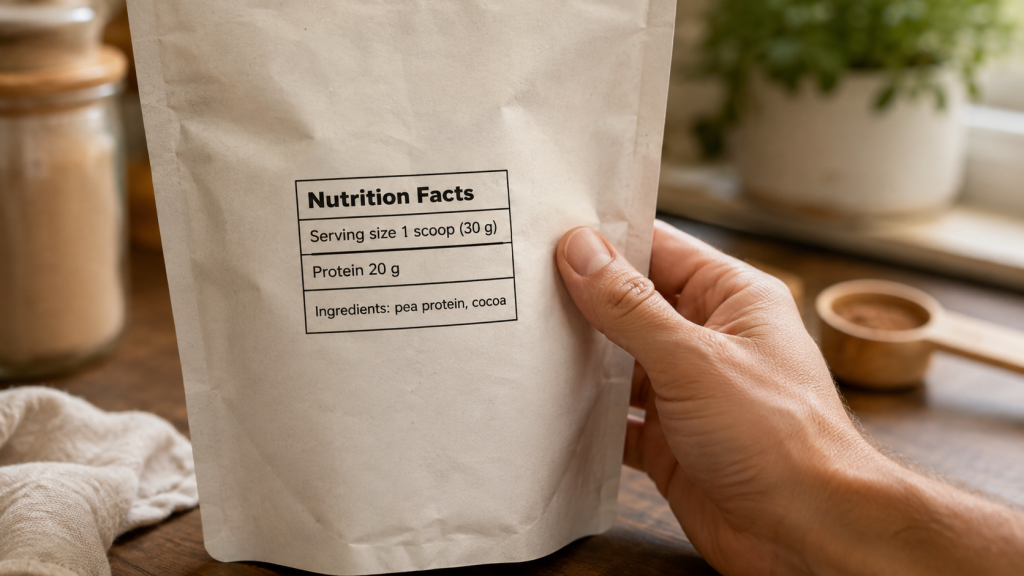
1. Check protein per serving, not per scoop. Scoop sizes aren’t standardised. Brands set them. A 45 g scoop delivering 22 g of protein is a worse product than a 30 g scoop delivering 24 g.
2. Work out the protein percentage. Divide protein grams by serving size. A 30 g serving with 24 g protein is 80% protein strong. Down at 50–60%, you’re mostly buying carbohydrates and fillers.
3. Look for third-party testing. Protein powders are dietary supplements, and the FDA doesn’t verify them before they reach shelves. Certifications from NSF Certified for Sport, Informed Choice or Informed Sport mean an independent lab has checked purity, banned substances and label accuracy. The Clean Label Project has reported heavy metals including lead, arsenic and mercury in some products levels unlikely to cause serious harm at normal servings, but a good argument for buying tested brands.
4. Avoid proprietary blends. If a label says anabolic matrix without listing quantities, you have no idea what you’re paying for. Dietitians consistently advise skipping these.
5. Watch for protein spiking. Some manufacturers add cheap amino acids like glycine or glutamine to inflate the protein figure on nitrogen tests. A published amino acid profile is a good sign a brand isn’t doing this.
6. Scan the sugar and sweeteners. Anything above a few grams of added sugar per serving is a red flag. If sugar alcohols are present and you’re prone to bloating, expect some.
What You’re Really Paying Per Gram of Protein
Almost nobody does this maths, and it’s the fastest way to spot a bad deal.
Cost per gram of protein = price ÷ (servings per container × protein grams per serving)
A tub costing $40 with 30 servings at 24 g each gives you 720 g of protein about 5.5 cents per gram. A premium $60 tub with 25 servings at 20 g each gives 500 g, or 12 cents per gram. More than double, for the same nutrient.
Run this before you buy and the marketing stops mattering. Then compare it to food eggs, milk, chicken thighs and lentils are often cheaper per gram of protein than any powder on the shelf, which is worth knowing before you commit to a subscription.
Side Effects and Who Should Be Cautious
For most healthy adults, protein shakes are safe as part of a balanced diet. But there are real, common side effects worth knowing about
- Digestive discomfort. Bloating, gas, cramps, constipation or nausea usually from lactose in whey concentrate, or from sugar alcohols in low-carb formulas. Whey protein isolate or a plant-based protein typically resolves this.
- Allergic reactions. A dairy allergy can trigger a rash, swelling or a runny nose. Plant powders sometimes contain nuts, so check the ingredient list if you have a nut allergy.
- Unintended weight gain. A shake is calories. Adding two a day on top of your usual eating, without adjusting anything else, adds up.
- Contaminants. Covered above third-party testing is the answer.
- Existing kidney conditions. If you have kidney disease, get medical advice before raising protein intake.
Teenagers are a specific case. The Academy of Nutrition and Dietetics advises teenage athletes get most of their protein from food rather than supplements, given their bodies are still developing.
Mistakes Beginners Make in the First Month
Treating shakes as a replacement for meals. They’re not nutrient-dense the way real food is. Two shakes a day is a sensible ceiling for most people.
Buying on flavour reviews alone. Taste matters you won’t drink something you dislike but check the nutrition panel first, then flavour.
Expecting visible results in two weeks. You may notice better satiety and steadier energy quickly. Changes in body composition take months of consistent resistance training and adequate total calories.
Obsessing over timing while missing the daily total. People agonise over the anabolic window while falling 40 g short every day. Fix the total first.
Assuming more is better. Beyond roughly 30–40 g in one sitting, the extra protein doesn’t add much to muscle protein synthesis. Spread it across the day instead.
Skipping the rest of the diet. Protein is one macronutrient. Without enough carbohydrates to fuel training and fats for hormone production, a great protein intake won’t do much for you.
Forgetting hydration. Higher protein intakes increase your water needs. Drink accordingly