Protein Shake Before or After a Workout: Which Is Better?
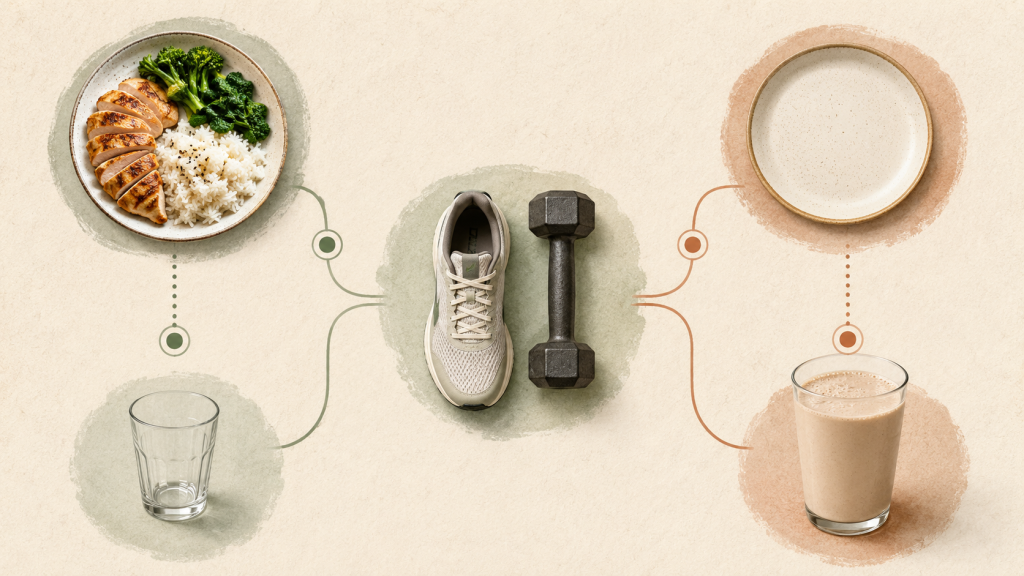
Protein shake before or after workout which option is better? For most healthy adults, either timing can work. The better choice is the one that fits their schedule, feels comfortable and helps them meet their total daily protein needs.
Research directly comparing protein immediately before versus immediately after resistance training found similar improvements in muscle size and strength. Your most recent meal usually matters more than whether you drink a shake at 5:45 or 6:45.
If you ate a protein-rich meal within a few hours before training, there is no need to rush for a shake afterward. If you are training after a long gap without food, having protein shortly before or after your workout becomes more useful.
The Short Answer
- Drink it before training if your last protein-rich meal was several hours ago and the shake does not upset your stomach.
- Drink it after training if you exercised fasted, your next meal is far away or you prefer training without food in your stomach.
- Skip the shake if you recently ate protein and another balanced meal is coming soon.
Protein timing is a useful detail, but it cannot replace adequate daily protein, enough calories and consistent resistance training.
Does Protein Timing Really Matter?
Timing matters less than many supplement advertisements suggest.
In a 10-week trial, 21 resistance-trained men consumed 25 grams of protein either immediately before or immediately after training. Both groups improved, but researchers found no significant difference between them in strength or muscle growth.
A meta-analysis of protein-timing studies reached a similar conclusion consuming enough total protein was a more important explanation for improvements in muscle and strength than taking it at a precise time.
This does not mean timing is completely irrelevant. Eating protein reasonably close to exercise can be convenient, particularly when you have not eaten for several hours. It simply means there is no universal 30-minute deadline.
For a broader explanation of timing throughout the day, read our complete guide to when you should drink a protein shake.
Start With One Question: When Did You Last Eat?
Your last meal is the easiest way to decide whether you need a shake.
| Your situation | Practical choice |
|---|---|
| You ate a protein-rich meal 1–3 hours before training | Either wait for your next meal or drink the shake later |
| Your last meal was 4+ hours ago | Have a light shake before training or protein soon afterward |
| You trained first thing in the morning without eating | Have breakfast or a shake after training |
| Shakes make you feel heavy during exercise | Drink it after training |
| Your next meal will be several hours away | A post-workout shake is convenient |
| You already meet your daily protein target with food | A shake may not be necessary |
These are practical guidelines, not strict medical rules. Digestion, training intensity and personal preference differ.
Benefits of Drinking a Protein Shake Before a Workout
A pre-workout shake can be useful when you have not eaten protein for several hours.
It provides amino acids around training
Protein is digested into amino acids that your body uses to maintain and repair tissue. Consuming protein before exercise means amino acids will be available during the period around your workout.
It is convenient when a full meal is impractical
A simple shake can be easier than preparing chicken, eggs or another meal when you are short on time. Whey and other protein powders generally provide a concentrated serving without requiring a large meal.
It may prevent hunger during training
If hunger distracts you or causes you to shorten a workout, a small shake may help. For long or demanding sessions, remember that carbohydrates are the main fuel consideration; protein should not replace appropriate carbohydrate and fluid intake.
How long before a workout should you drink it?
Try a small shake about 30–60 minutes before training. If it contains milk, oats, nut butter or a large amount of fruit, allow more time because it will digest more slowly.
When a Pre-Workout Shake Can Be a Bad Choice
Some people experience bloating, nausea, cramping or a heavy feeling when they drink a shake too close to exercise. This can be especially uncomfortable during running, jumping or exercises that place pressure on the abdomen.
If this happens
- Drink the shake earlier.
- Use a smaller serving.
- Mix it with water instead of milk.
- Avoid large amounts of fat and fiber immediately before training.
- Consider a lactose-free or plant-based option if dairy causes symptoms.
- Drink the shake after training instead.
There is no muscle-building advantage to forcing down a pre-workout shake that makes your session worse.

Benefits of Drinking a Protein Shake After a Workout
Resistance exercise stimulates muscle remodeling, and dietary protein supplies the amino acids needed for that process. A post-workout shake is therefore a practical recovery option, but it is not mandatory.
It is useful after fasted training
If you trained early in the morning without eating, having protein afterward helps end the long gap without food. A shake is convenient, although eggs, yogurt, milk, tofu or another protein-rich breakfast can work just as well.
It helps when your next meal is far away
If you will not eat for several hours after training, a shake can bridge the gap. This is often more realistic than carrying a full meal to the gym.
It can make daily protein easier to reach
Some people consistently fall short of their protein target. A measured post-workout serving creates an easy routine and makes the day’s intake more predictable.
If you need help preparing one, use our guide on how to make a protein shake with or without powder.
Should You Drink a Protein Shake After Every Workout?
No. A shake is optional.
If you are a recreational exerciser who eats adequate protein across balanced meals, you may not need a shake after every session. Whole foods such as eggs, dairy, fish, chicken, lean meat, beans, lentils, tofu and soy foods provide protein along with other nutrients.
A post-workout shake is most useful when
- You trained without eating beforehand.
- Your next meal is several hours away.
- You struggle to meet your protein needs with food.
- You have a high training volume.
- You need a portable and convenient option.
Remember that shakes still contain calories. Adding one on top of an already adequate diet may not support your goals, particularly if you are trying to lose weight.

How Long After a Workout Should You Drink a Protein Shake?
For most people, having protein within roughly two hours after exercise is a convenient target, not an emergency deadline.
The traditional “anabolic window” was often described as a narrow 30–60 minute period. Current evidence supports a more flexible view. The muscle-building response to resistance exercise remains elevated well beyond the time it takes to leave the gym, and a pre-workout meal continues to supply amino acids afterward.
If you ate protein shortly before training, simply have your next meal at its normal time. If you trained after a long fast, eating sooner afterward is sensible, but you still do not need to panic about an exact minute.
Fasted Training: Does Timing Become More Important?
Protein soon after fasted training is practical because you have already gone many hours without eating. Have a shake or protein-rich breakfast when convenient after finishing rather than deliberately waiting until much later.
However, evidence does not establish a universal rule that every healthy person must consume exactly 20 grams within one hour. Your daily intake, body size, workout and next meal all matter.
If you dislike training fasted, a small shake before exercise is another option. Test what feels best for your stomach and performance.

Does the Answer Change for Cardio?
For ordinary cardio sessions, precise protein timing is usually less important than it is for resistance training. Eat enough protein during the day and have a normal meal after your workout.
For long endurance sessions, carbohydrates, fluids and electrolytes may be more urgent recovery priorities. Protein still contributes to tissue repair, but it is only one part of the recovery plan.
How Much Protein Should Your Shake Contain?
The International Society of Sports Nutrition suggests approximately 20–40 grams of high-quality protein per serving as a useful general range for active adults. Another way to estimate a serving is roughly 0.25 grams per kilogram of body weight.
For total daily intake, the same position stand identifies approximately 1.4–2.0 grams per kilogram per day as a general range for most exercising people. Needs vary with age, training, calorie intake, health and goals.
For example, a 70-kilogram active adult using 1.6 grams per kilogram would target approximately 112 grams per day:
70 × 1.6 = 112 grams of protein per day
This is an example, not an individualized prescription. More is not automatically better.
Our guide to how many protein shakes a day may be appropriate can help you decide whether you need one or more servings.
Before or After: Which Option Should You Choose?
| Your situation | Better option |
| Protein-rich meal 1–3 hours before training | Either, or skip the shake |
| Last meal 4+ hours before training | Before or soon after |
| Early-morning fasted training | After, or a small shake before |
| Sensitive stomach during exercise | After |
| Next meal is several hours away | After |
| Hunger reduces workout quality | Before |
| Daily protein target is difficult to reach | Whichever time is easiest to maintain |
The best option is the one that fills a real gap in your diet without causing digestive discomfort or adding unnecessary calories.
What If Protein Shakes Upset Your Stomach?
Common causes include:
- Lactose: Whey concentrate may contain more lactose than whey isolate. A lactose-free dairy or plant-based protein may be easier to tolerate.
- Large serving size: Try half a serving and drink it slowly.
- Sugar alcohols or sweeteners: Check the ingredient list if the product causes gas or bloating.
- Too much fat or fiber: Nut butter, oats and large quantities of fruit can slow digestion before exercise.
- Drinking too quickly: Sip the shake instead of finishing it in a minute.
Persistent digestive symptoms should be discussed with a healthcare professional.
Frequently Asked Questions
Is it better to drink whey protein before or after a workout?
Neither is universally better. If you have not eaten for several hours, whey before training is convenient. If you trained fasted or will not eat soon, whey afterward is practical.
Can I drink a protein shake during a workout?
You can, but most ordinary workouts do not require it. Water is usually enough during shorter sessions. Longer endurance events may require a planned combination of carbohydrates, fluids and electrolytes.
Can I drink a protein shake both before and after training?
You can, but two shakes may be unnecessary. Count both servings toward your total daily protein and calorie intake. One appropriately timed serving plus balanced meals is enough for many people.
Do protein shakes build muscle without exercise?
Protein supports normal tissue maintenance, but drinking a shake alone does not create the training stimulus needed for meaningful muscle growth. Progressive resistance training, adequate energy, recovery and sufficient protein work together.
Is a meal as good as a post-workout shake?
Yes. A balanced meal containing enough high-quality protein can support recovery. Shakes are mainly useful because they are portable and convenient.
The Bottom Line
A protein shake can work before or after a workout. If you ate a protein-rich meal within the previous few hours, choose whichever time you prefer or skip the shake. If you trained after a long gap without food, have protein reasonably close to your session, either shortly before or after.
Focus first on consistent training, adequate total protein and balanced meals. Timing is the final adjustment, not the foundation.
Medical disclaimer: This article provides general educational information and is not a substitute for individualized medical or nutrition advice. People with kidney disease, liver disease, diabetes, pregnancy, digestive disorders or medication-related concerns should speak with a doctor or registered dietitian before substantially changing protein intake.
Research Sources
- Schoenfeld BJ, et al. Pre- versus post-exercise protein intake has similar effects on muscular adaptations (2017)
- Schoenfeld BJ, Aragon AA, Krieger JW. The effect of protein timing on muscle strength and hypertrophy a meta-analysis (2013)
- Jäger R, et al. International Society of Sports Nutrition position stand protein and exercise (2017)
- Kerksick CM, et al. International Society of Sports Nutrition position stand nutrient timing (2017)