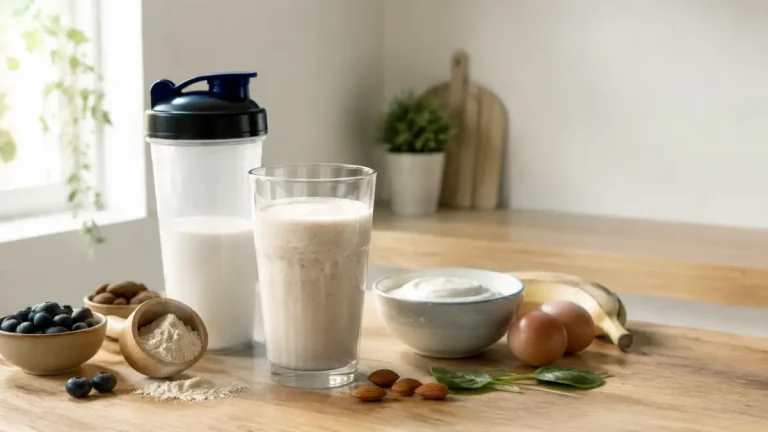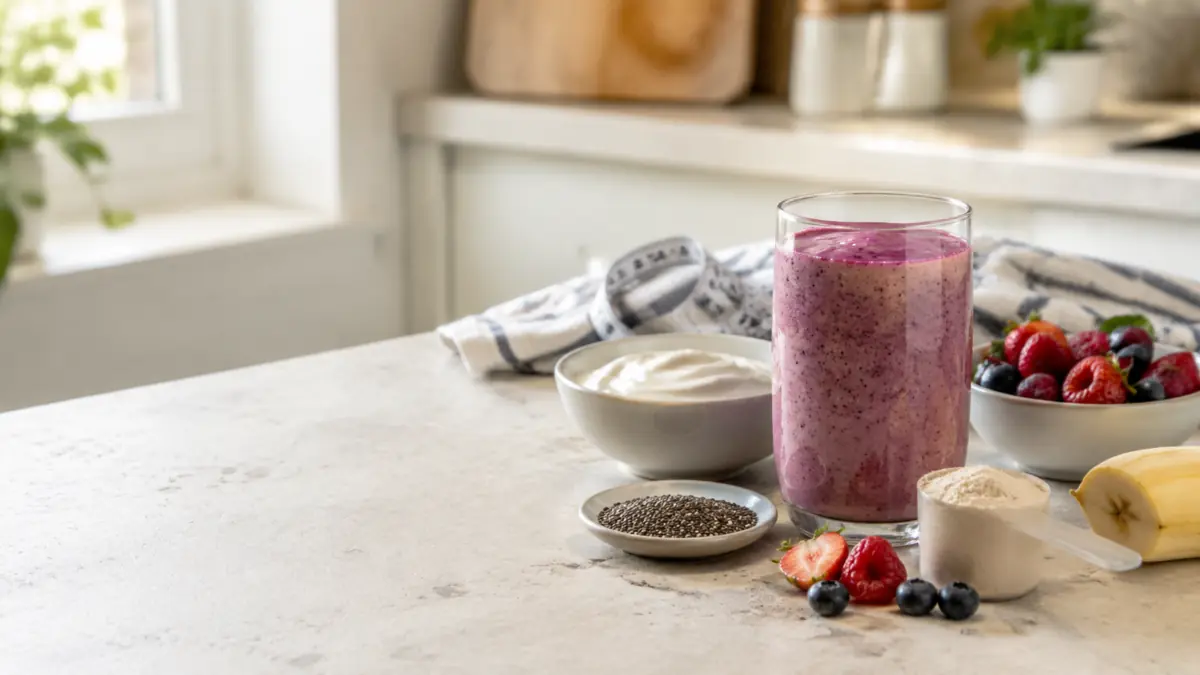
Do Protein Shakes Help You Lose Weight? (And How to Use Them Properly)
Do protein shakes help you lose weight? Yes but not for the reason most people assume.
A protein shake does not directly burn body fat. Instead, it can make a calorie deficit easier to maintain by helping you feel fuller, increasing your daily protein intake, and supporting muscle preservation during weight loss.
The shake itself is neither good nor bad for weight loss. The result depends on how you use it and one decision determines whether it helps you or quietly works against you.
The Answer Depends on One Thing: Are You Adding or Replacing?
This is the most important question to ask.
Adding a shake means drinking it on top of your existing meals and snacks. A typical scoop of protein powder mixed with water contains around 120–150 calories. If you drink it every day without reducing calories elsewhere, it becomes an addition to your diet.
Over time, those additional calories could slow your progress or contribute to weight gain.
Replacing means using the shake instead of a higher-calorie meal or snack. For example, replacing a café lunch containing a sandwich, crisps, and a latte with a balanced protein shake may significantly reduce your total calorie intake while providing more protein.
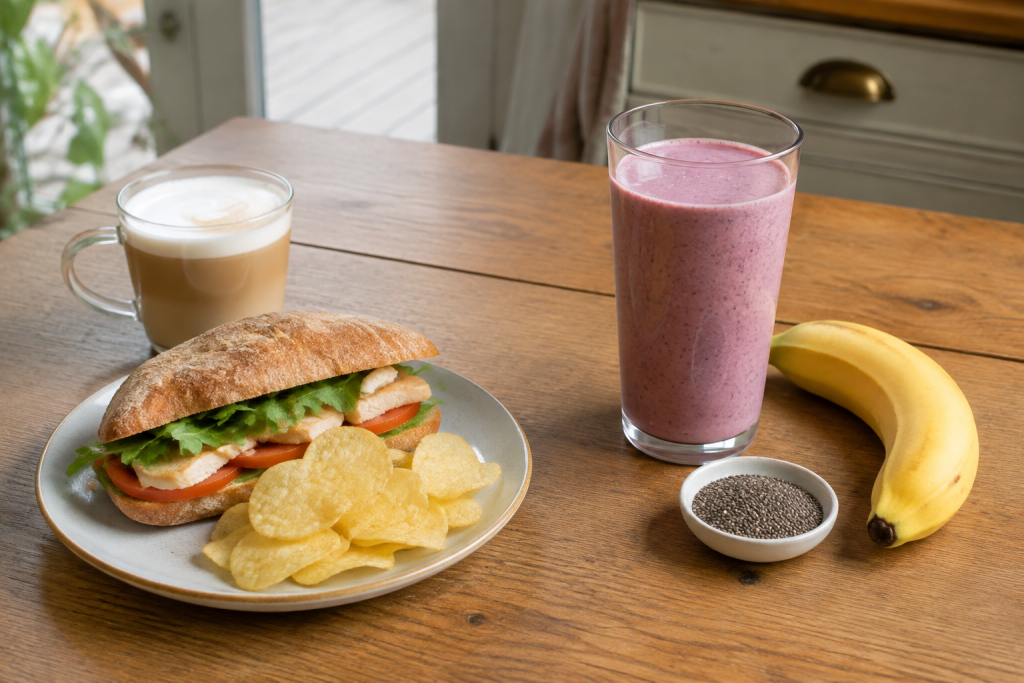
Here is a simple comparison
| Meal | Approximate calories | Protein |
|---|---|---|
| Café sandwich, crisps, and latte | 720 | 22g |
| Protein shake, banana, and chia seeds | 290 | 28g |
| Difference | −430 | +6g |
This is how a protein shake may support weight loss: fewer calories, more protein, and potentially better appetite control.
If you cannot clearly identify what the shake is replacing, it is probably an addition rather than a replacement.
How Protein May Support Weight Loss
Once you use the shake correctly, protein may make a calorie deficit easier to follow in several ways.
Protein May Help Control Hunger
Protein generally provides greater satiety than the same number of calories from refined carbohydrates or fat.
Eating protein influences appetite-related hormones and may help you remain satisfied between meals. In practical terms, this could mean
- Fewer cravings
- Less snacking between meals
- Better portion control
- Reduced hunger before your next meal
However, protein does not eliminate hunger completely. Your overall calorie intake, fibre consumption, sleep, stress, and activity level also affect appetite.
Protein Helps Preserve Lean Muscle
When you lose weight, the weight lost may include both body fat and lean body mass.
Maintaining adequate protein intake, especially when combined with resistance training, can help preserve muscle while you are in a calorie deficit.
This matters because preserving muscle supports strength, physical function, and healthier body composition. Two people may lose the same amount of weight, but the person who maintains more muscle will generally achieve a better fat-to-lean-mass ratio.
Resistance training makes this effect stronger. Protein supplies the necessary amino acids, while training gives your body a reason to retain muscle.
Protein Requires Energy to Digest
Your body uses energy to digest and process food. This is known as the thermic effect of food.
Protein has a higher thermic effect than carbohydrates and dietary fat. Your body may use approximately 20–30% of protein’s calories during digestion and processing, compared with lower percentages for the other macronutrients.
This effect is real, but it should not be exaggerated. It may provide a small advantage, but the calorie deficit remains the primary driver of weight loss.
The Catch: Liquid Calories May Not Fill You Up the Same Way
Liquid calories are often less satisfying than solid food.
Liquids require little or no chewing and generally leave the stomach faster than solid meals. Therefore, a scoop of protein powder mixed with water might not keep everyone full for very long.
You may drink a 130-calorie shake, become hungry again shortly afterward, and eat your regular meal anyway. When that happens, the shake becomes an additional source of calories rather than a replacement.
Fortunately, there are ways to make a shake more filling.
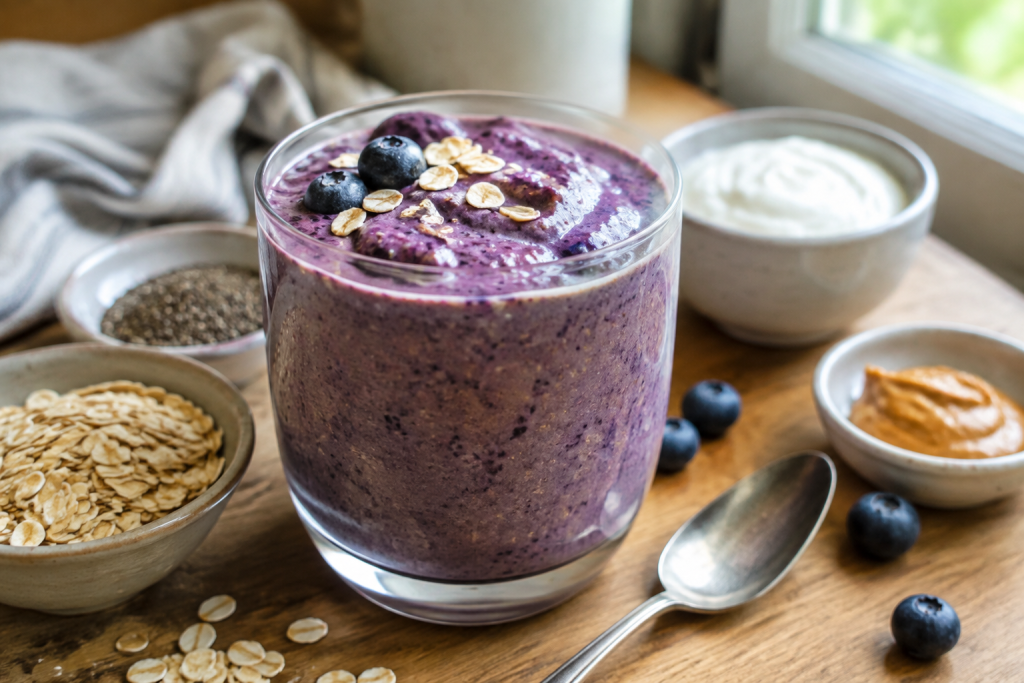
Learn how to make a protein shake with or without protein powder.
Add Fibre and a Small Amount of Healthy Fat
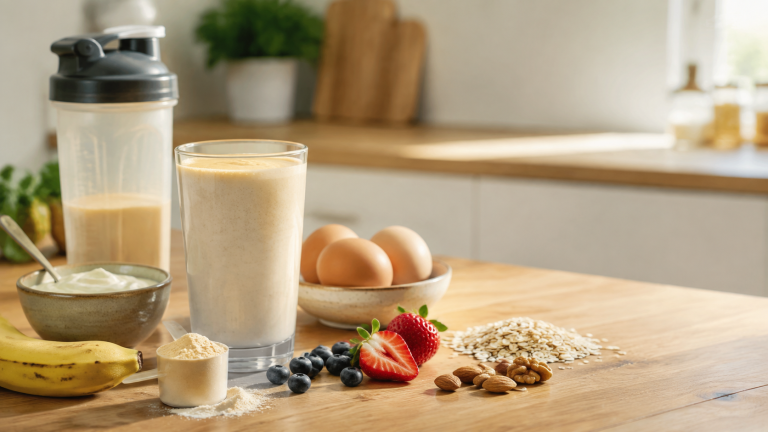
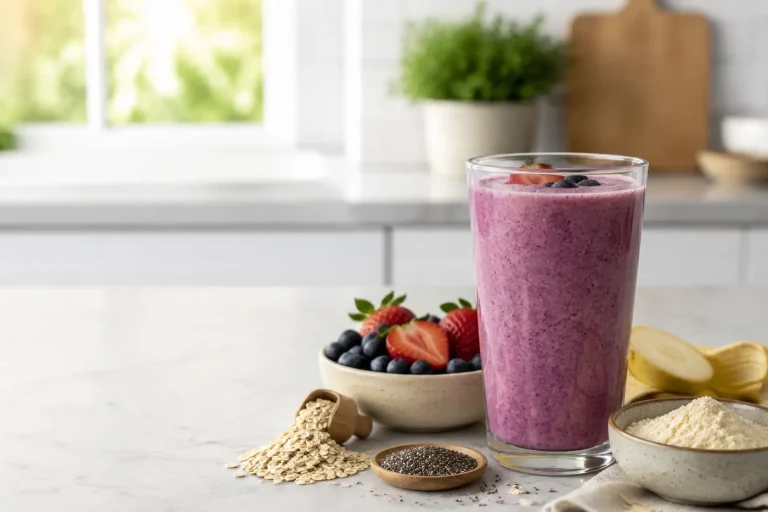
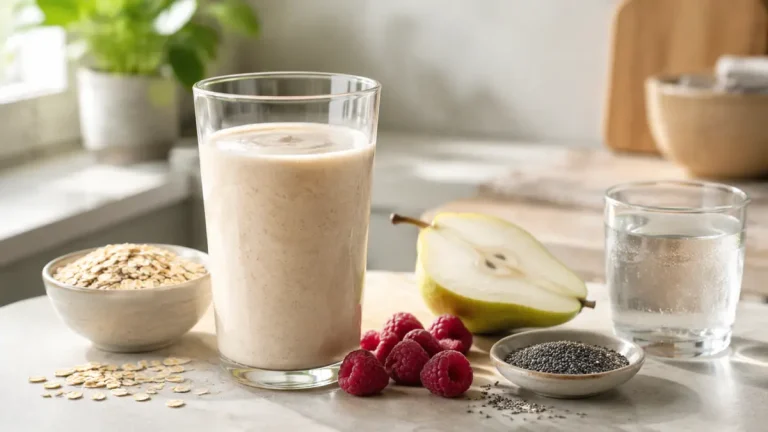
A filling shake could include
- 20–30g protein
- Berries or half a banana
- Chia seeds or ground flaxseed
- Rolled oats
- Greek yogurt
- A small amount of nut butter
- Water or unsweetened milk
Fibre, thickness, and a little dietary fat may slow digestion and help the shake behave more like a complete meal.
Be careful with portions. Nut butter, oats, seeds, and fruit are nutritious, but their calories can accumulate quickly.
Drink It Slowly
Avoid drinking the entire shake in a few seconds.
Sip it over approximately 15–20 minutes. If you prepare a thick smoothie, try eating it slowly with a spoon. Slowing down gives your body more time to recognise that you have consumed food.
Four Ways to Use Protein Shakes for Weight Loss
Choose the approach that matches your eating habits and the area where you consume unnecessary calories.
1. Use It as a Strategic Snack
This approach may work well for people who overeat at dinner.
A simple protein shake in the afternoon can help prevent extreme hunger before the evening meal. You may then find it easier to eat a normal dinner portion instead of taking a larger serving or returning for seconds.
Keep the snack relatively light. A scoop of protein powder mixed with water or unsweetened almond milk may be enough.
2. Replace One High-Calorie Meal
This is best for people whose breakfast or lunch is high in calories but low in protein.
For example, you could replace a pastry-based breakfast or takeaway lunch with a balanced shake containing protein, fruit, and fibre.
One meal replacement per day is generally more practical than replacing multiple meals. Depending too heavily on shakes can make your diet difficult to sustain and reduce your intake of important whole foods.
3. Use It as a Protein Top-Up
Some people already eat reasonably balanced meals but struggle to reach their protein target.
In that situation, a shake can fill the gap without requiring major changes to the rest of the diet.
Individual protein needs vary according to body weight, age, health, activity level, and training goals. People who are dieting and resistance training may benefit from a higher protein intake than the basic minimum guideline.
Rather than consuming most of your protein at dinner, spread it across your meals. Approximately 25–30g at each main meal is a practical starting point for many adults.
4. Use It After Resistance Training
A post-workout shake can be a convenient way to provide protein after exercise.
Protein supports muscle repair, while resistance training helps your body maintain lean mass during weight loss. You do not have to drink the shake immediately after your final repetition, but having a protein-rich meal or shake within a few hours of training is a reasonable approach.
Remember that post-workout calories still count toward your daily intake.
How to Choose a Protein Shake for Weight Loss
Ignore marketing terms such as “lean,” “shred,” “slim,” or “fat-burning.” These words do not automatically make a product effective for weight loss.
Instead, turn the package around and examine the nutrition label.
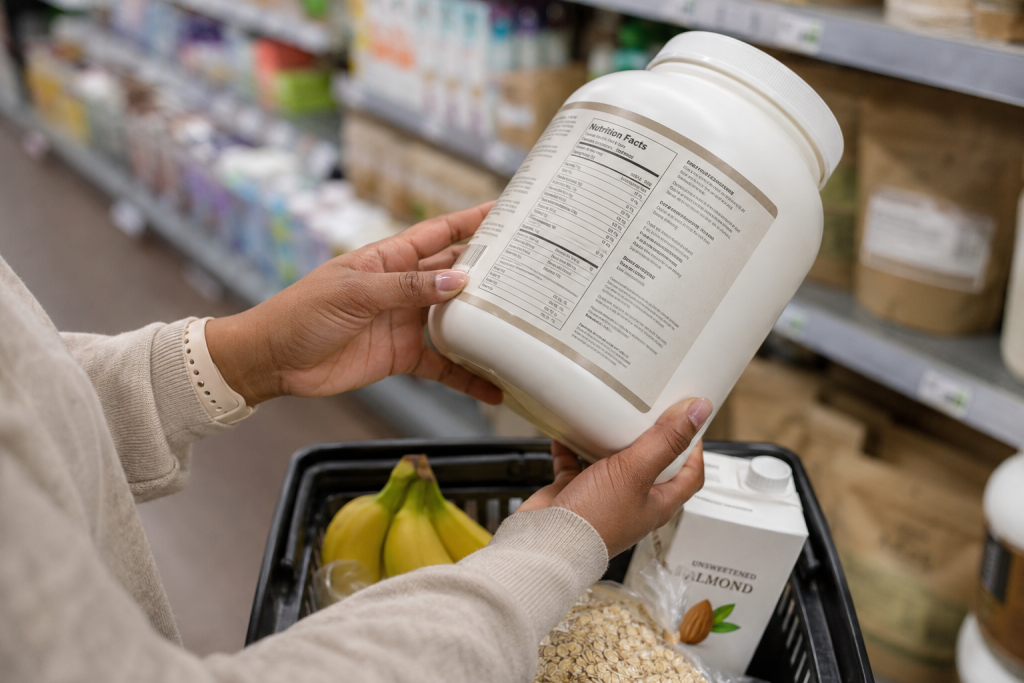
Use the following checklist
| What to check | Practical target | Why it matters |
|---|---|---|
| Protein per serving | 20g or more | Provides a meaningful amount of protein |
| Calories | Under 150 for powder alone | Improves the protein-to-calorie ratio |
| Added sugar | Preferably under 3–5g | Avoids unnecessary calories |
| Ingredient list | Relatively short and clear | Makes the product easier to evaluate |
| Fibre | Any amount is a bonus | May improve fullness |
| Third-party testing | NSF Certified for Sport or Informed Choice | Provides additional quality assurance |
Products to Approach Carefully
Be cautious with
- Proprietary “fat-burning” blends
- High amounts of added sugar
- Large quantities of stimulants
- Products making unrealistic promises
- Products claiming to cause weight loss without a calorie deficit
- Ingredient blends that do not disclose individual quantities
A protein powder should primarily provide protein. You do not need a complicated blend of trendy ingredients.
Which Type of Protein Is Best?
For weight loss, your total protein and calorie intake matter more than the specific protein source.
Whey Protein
Whey is absorbed relatively quickly and contains all essential amino acids. It is also rich in leucine, an amino acid involved in muscle protein synthesis.
It is a convenient option after resistance training or when you need an easy protein source.
Casein Protein
Casein digests more slowly than whey. Some people find it more filling, making it potentially useful in the evening or when late-night hunger is a problem.
Plant-Based Protein
Pea, soy, and blended plant proteins can also be effective options.
A mixture such as pea and rice protein can provide a more balanced amino acid profile. Choose a product that supplies at least 20g of protein per serving and fits your calorie requirements.
People who avoid dairy or experience digestive discomfort with whey may prefer a plant-based option.
Ready-to-Drink Shakes vs. Protein Powder
Both options can work, but they have different advantages.
Ready-to-Drink Shakes
Ready-to-drink bottles are convenient and portion-controlled. They can be useful when travelling, working, or managing a busy schedule.
However, some bottled shakes contain 200–300 calories or more because they include milk, oils, carbohydrates, and sweeteners. Some are designed as complete meal replacements, while others are simply protein drinks.
Always check the calorie and protein content instead of assuming every bottled shake supports weight loss.
Protein Powder
Protein powder is usually cheaper per serving and gives you more control over the final drink.
A scoop mixed with water might contain around 120 calories. The same scoop blended with whole milk, banana, honey, oats, and peanut butter could contain 450–600 calories.
Neither option is automatically better. Choose the one that helps you control your total intake and remain consistent.
Can You Lose Weight Drinking Only Protein Shakes?
You may lose weight in the short term if drinking only shakes creates a large calorie deficit. However, a shake-only diet is not a sensible long-term strategy.
It Can Create Nutritional Gaps
Whole foods provide fibre, vitamins, minerals, and beneficial plant compounds. Protein powders cannot fully replace the nutritional variety offered by vegetables, fruits, legumes, whole grains, dairy products, nuts, seeds, fish, meat, and eggs.
It Is Difficult to Sustain
Most people do not want to drink every meal indefinitely. A diet with a built-in ending but no transition plan often leads to weight regain.
Very Large Deficits May Increase Muscle Loss
Even with high protein intake, an extreme calorie deficit may result in the loss of lean body mass. A moderate deficit combined with resistance training is generally more sustainable.
It Does Not Build Eating Skills
A liquid-only diet does not teach you how to select balanced meals, manage portions, cook nutritious food, or maintain your results.
Use shakes as a convenient supplement not as your entire diet.
The Regain Problem and How to Avoid It
Meal-replacement shakes may help lower calorie intake temporarily. However, you will eventually return to eating regular meals.
If your food choices and portion sizes remain unchanged, the weight may return.
Treat the shake as temporary support while you develop habits that can last without it.
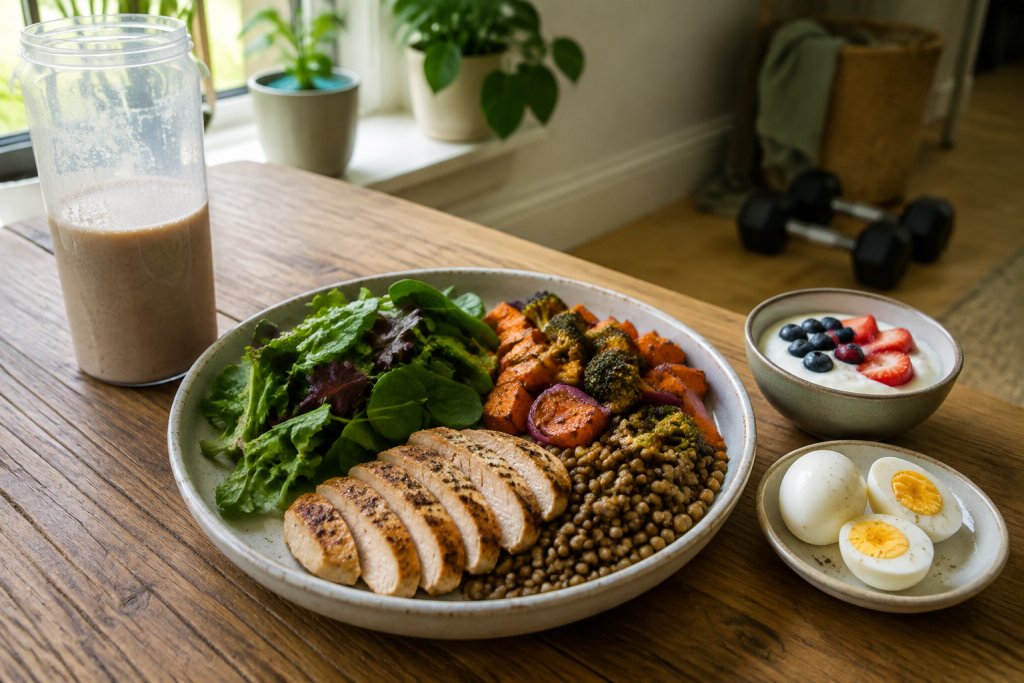
While using a shake, work on the following:
- Learn what 25–30g of protein looks like on a plate
- Improve the meal that the shake currently replaces
- Develop a consistent resistance-training routine
- Eat more vegetables, fruit, legumes, and whole grains
- Practise appropriate portion sizes
- Create meals you would realistically eat after reaching your goal
Useful whole-food protein sources include:
- Greek yogurt
- Cottage cheese
- Eggs
- Chicken breast
- Fish
- Lean meat
- Tofu and tempeh
- Beans and lentils
- Soy products
The eventual goal should be a balanced diet that can include a shake when convenient without depending on it.
Common Mistakes That Cancel Out the Benefit
Turning the Shake Into a High-Calorie Dessert
A shake containing banana, mango, honey, oat milk, peanut butter, and chocolate protein powder could easily reach 500–600 calories.
That may be acceptable as a complete meal, but it will not help if it replaces a meal containing fewer calories.
Mixing It With Juice or Sweetened Milk
Fruit juice and sweetened milk can add significant calories without greatly improving fullness.
Water or unsweetened milk is a lower-calorie default. Regular dairy milk is also an option when you want additional protein and have room for the calories.
Forgetting to Count the Calories
A shake is not calorie-free simply because it is considered healthy.
Include the powder, milk, fruit, seeds, nut butter, and every other ingredient when estimating your daily intake.
Drinking It Too Quickly
Drinking a shake in a few seconds may make it less satisfying. Slow down and give your appetite signals time to respond.
Assuming More Protein Means Faster Weight Loss
Higher protein intake does not automatically cause faster fat loss.
Once you meet your needs, additional protein still contributes calories. More is not always better.
Using the Shake to Compensate for Poor Eating Habits
A protein shake cannot cancel out consistently excessive calorie intake or a diet lacking nutritious foods.
It is a small practical tool not a licence to ignore the rest of your diet.
Frequently Asked Questions
Do protein shakes burn belly fat?
No. Protein shakes do not directly burn belly fat. They may support overall fat loss when they help you maintain a calorie deficit.
Is it okay to drink a protein shake every day?
Many healthy adults can drink one protein shake per day as part of a balanced diet, depending on their overall calorie and protein needs.
Should I replace breakfast or dinner with a protein shake?
Replace the meal that currently provides excessive calories and insufficient nutrition. Breakfast or lunch is often easier to replace sustainably.
Can I drink a protein shake without exercising?
Yes. However, combining adequate protein intake with resistance training provides additional benefits for muscle preservation and body composition.
What should I mix with protein powder for weight loss?
Water or unsweetened milk provides a low-calorie base. Fruit, oats, chia seeds, or Greek yogurt can make the shake more filling when portions are controlled.
How many protein shakes should I drink per day?
For most people, one shake per day is sufficient. Individual needs depend on total protein intake, calorie requirements, activity level, and health status.
The Bottom Line
Protein shakes can support weight loss, but only when used appropriately.
They work best when they
- Replace a higher-calorie meal or snack
- Help you meet your protein requirements
- Make hunger easier to manage
- Support muscle preservation alongside resistance training
- Fit within your total daily calorie intake
They work against you when they are added on top of your normal diet, filled with high-calorie ingredients, or treated as a solution that makes the rest of your eating habits irrelevant.
The most important question is simple What is this shake replacing?
If the answer is a higher-calorie, lower-protein food, it may be a useful tool. If it replaces nothing, it may simply be adding calories.
This article provides general information and is not personalised medical or nutrition advice. Speak with a doctor or registered dietitian before making significant dietary changes if you have diabetes, insulin resistance, kidney disease, an eating disorder, or take GLP-1 or other prescription medications.