Can a Protein Shake Replace a Meal? An Honest, Practical Answer
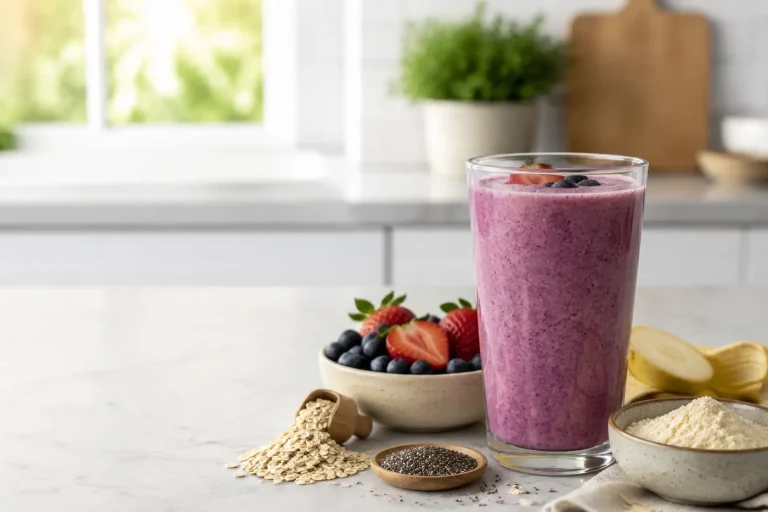
A protein shake can replace a meal occasionally but a scoop of protein powder mixed with water is usually not a complete meal. It provides protein, but often contains too little energy, fiber, carbohydrate, fat and micronutrient variety to keep you satisfied or replace a balanced plate.
To make a protein shake more meal-like, add whole-food sources of fiber, carbohydrate and healthy fat. Alternatively, choose a product specifically formulated and labeled as a meal replacement. Your needs still depend on your appetite, activity level, health and what you eat during the rest of the day.
Protein Shake vs. Meal Replacement: The Key Difference
A protein shake and a meal replacement shake are designed for different jobs.
| Protein shake | Meal replacement shake | |
|---|---|---|
| Main purpose | Add convenient protein | Replace a meal |
| Typical contents | Protein powder plus water or milk | Protein, carbohydrate, fat and added vitamins or minerals |
| Fiber | Often little or none | Often included, but amounts vary |
| Calories | Frequently closer to a snack | Usually higher, although products vary widely |
| Best use | Protein top-up, snack or post-workout drink | Occasional breakfast or lunch replacement |
The front of the package does not tell the whole story. Check the serving size, calories, protein, fiber, added sugar, fat and micronutrients on the Nutrition Facts or Supplement Facts panel.
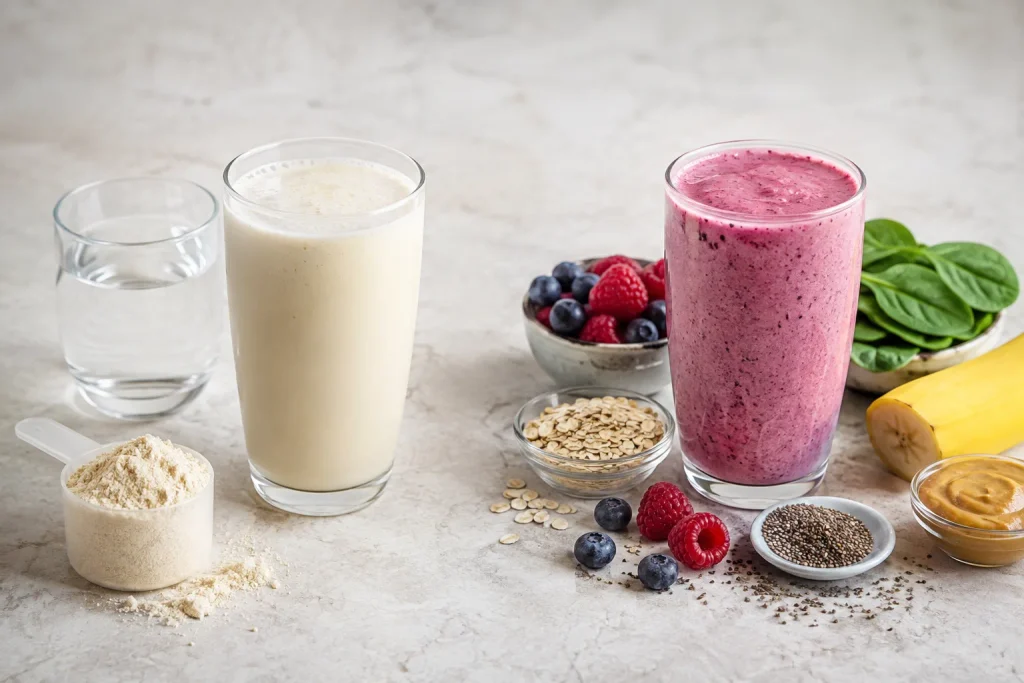
Some ready-to-drink protein beverages are fortified with vitamins and minerals, but that alone does not make them nutritionally equivalent to a meal. A drink can provide plenty of protein and still be low in fiber, total energy or dietary variety.
Why a Plain Protein Shake Usually Falls Short
A typical scoop of protein powder may provide approximately 20–30 grams of protein. That can be useful, but protein is only one part of a meal.
A balanced eating pattern also includes fruits and vegetables, grains or other carbohydrate sources, healthy fats and a variety of micronutrients. USDA’s MyPlate illustrates this broader balance using fruits, vegetables, grains, protein foods and dairy or fortified alternatives.
A plain shake mixed with water commonly lacks
- Fiber, which supports digestive health and can contribute to fullness
- Carbohydrate, an important source of energy
- Healthy fat, which supplies essential fatty acids and helps absorb fat-soluble vitamins
- Food variety, including fruits, vegetables and whole grains
- Enough total energy for some people, depending on the meal and individual needs
That is not a defect. Protein powder is a supplement intended to add protein conveniently. It does not have to function as a complete meal.
What Should a Meal-Replacement Shake Contain?
There is no single calorie or macronutrient target that defines a healthy meal for everyone. Needs vary with body size, age, activity, goals, health and the rest of the day’s food.
Instead of relying on one rigid formula, use this practical checklist. A more complete shake generally includes
- A meaningful serving of protein
- A source of fiber
- A quality carbohydrate source
- Some unsaturated fat
- Fruit or vegetables, when practical
- Enough energy to match its intended role in your day
If you are buying a packaged meal replacement, compare products rather than trusting the phrase “meal replacement” on the front. Look for a transparent ingredient list and meaningful amounts of protein and fiber. Check added sugar, allergens and whether the product is appropriate for your dietary needs.
How to Turn a Protein Shake Into a Meal
If you need help with the preparation process, follow our guide explaining how to make a protein shake step by step.
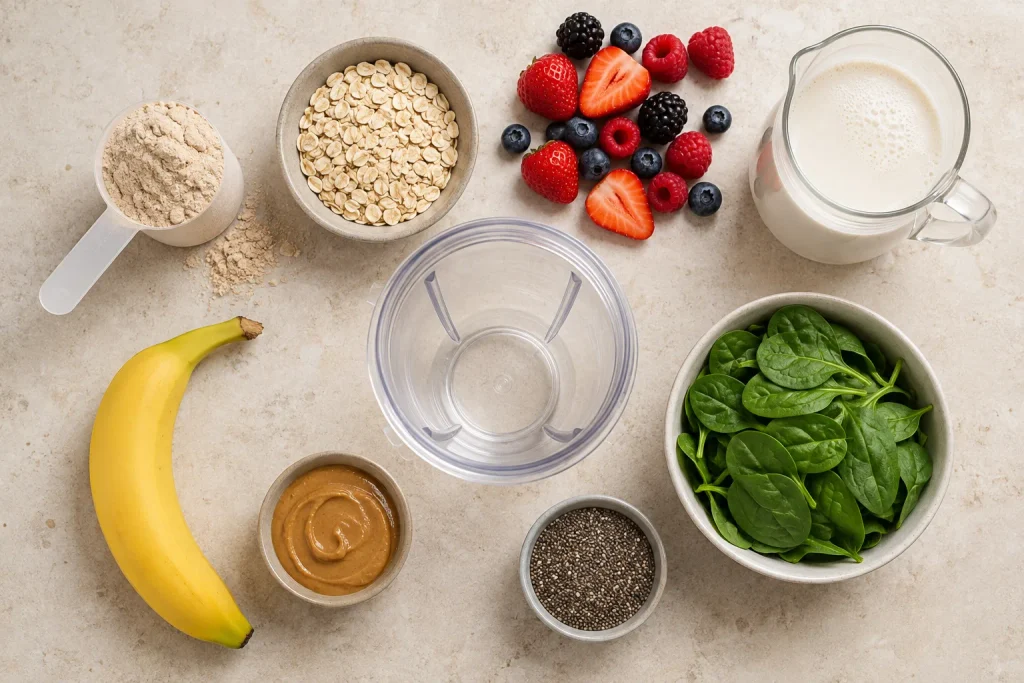
1. Start with protein
Use one serving of a protein powder you tolerate. Whey, casein, soy, pea and blended plant proteins can all work; the best option depends on allergies, dietary preferences and digestion.
2. Add fiber and carbohydrate
Choose one or two
- Oats
- Berries
- Banana
- Pear or apple
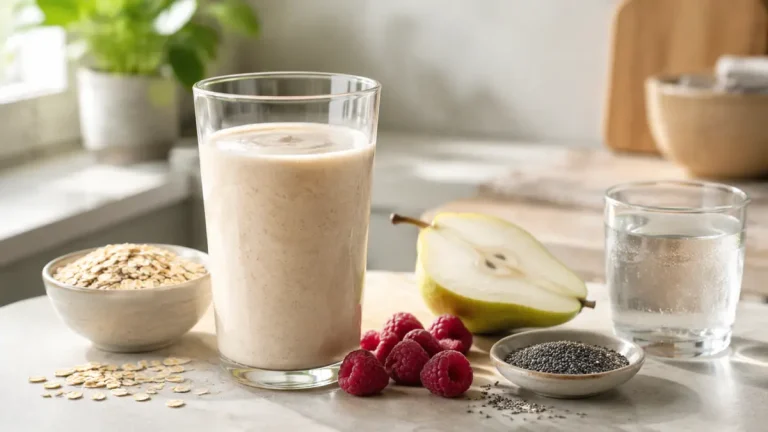
- Chia seeds
- Ground flaxseed
Fruit and oats provide carbohydrate as well as fiber and other nutrients. Increase high-fiber ingredients gradually if you are not accustomed to them.
3. Add a source of healthy fat
Choose one
- Peanut, almond or another nut butter
- Chia or flaxseed
- Walnuts or other unsalted nuts
- Avocado
Fat increases the shake’s energy content and may help make it more satisfying. Portions matter because nuts, seeds and nut butters are calorie-dense.
4. Choose the liquid
Water keeps calories low but adds no carbohydrate, fat or additional protein. Dairy milk or fortified soy milk can add protein and micronutrients. Other plant-based beverages vary widely, so check the label.
5. Add produce
Berries, banana, mango, spinach and other produce can add flavor, fiber and dietary variety. Rotate ingredients rather than making the identical shake every day.
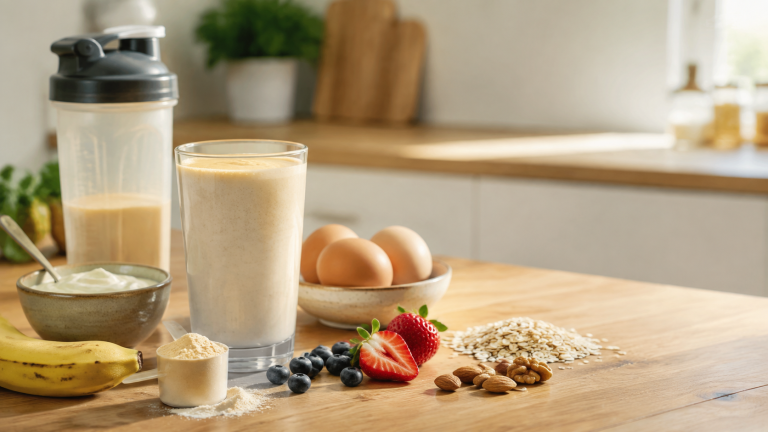
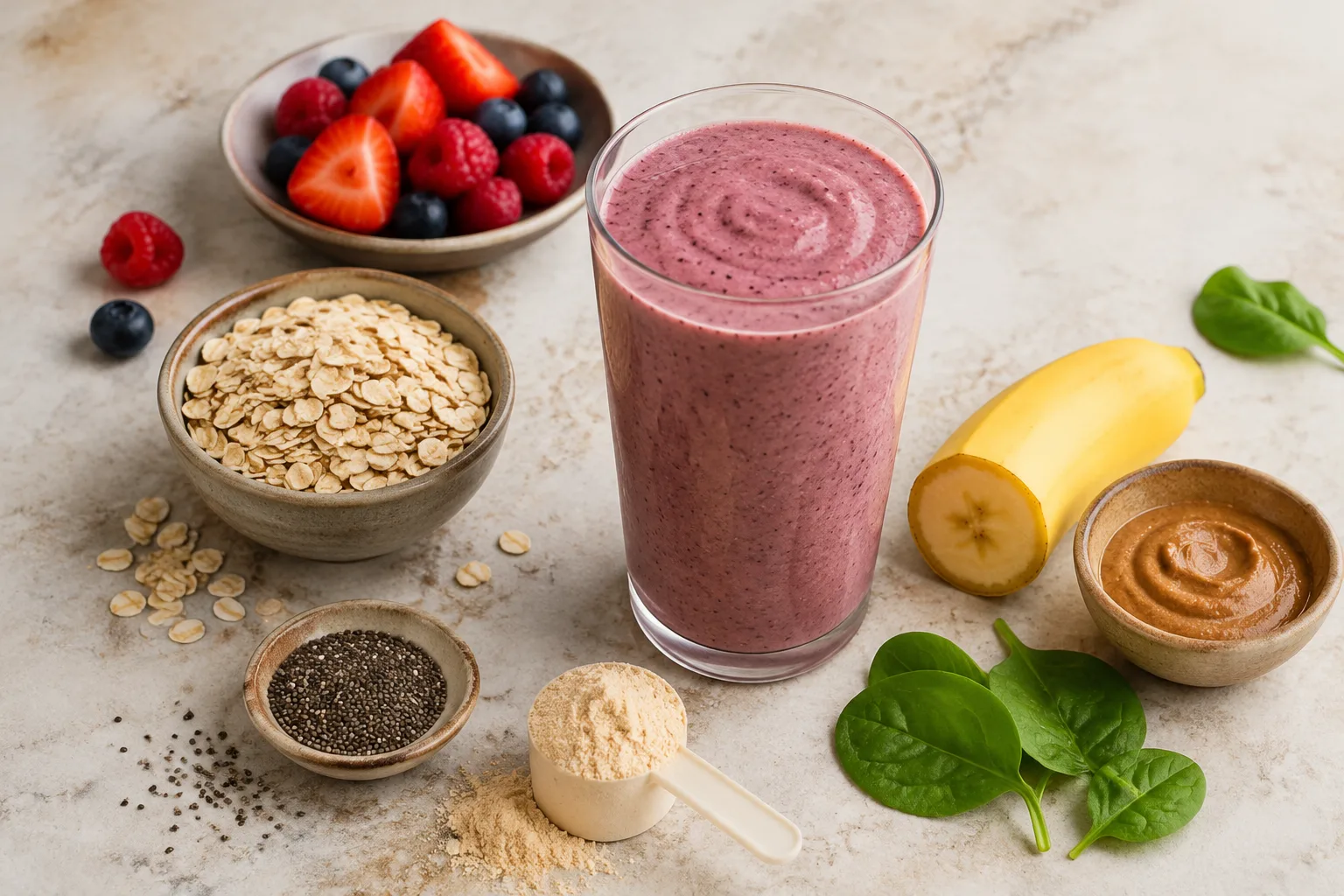
Example balanced protein shake
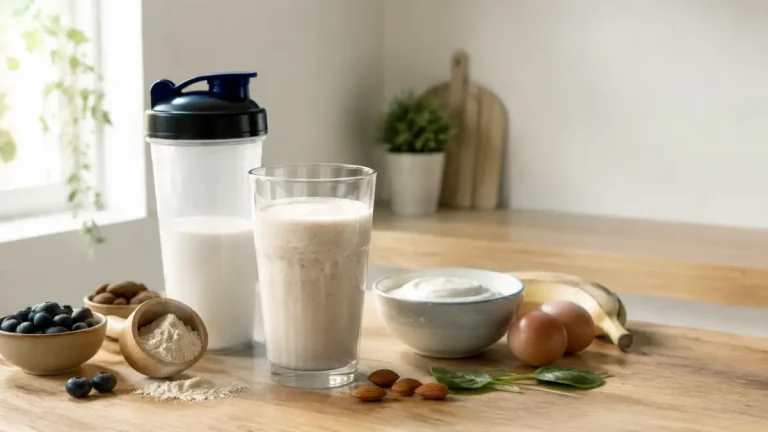
- 1 serving protein powder
- 1/2 cup rolled oats
- 1 cup berries or 1 small banana
- 1 tablespoon peanut or almond butter
- 1 cup dairy milk or fortified soy milk
- Ice and water as needed
The exact nutrition will depend on the products and portions you use. Calculate it from your ingredient labels if calories or macronutrients matter for your goals.
Are Protein Shakes Filling?
Protein can support satiety, but the answer depends on the whole shake not simply the number of protein grams.
A protein powder mixed with water may feel more like a snack. Adding fiber, fat and enough total energy can make it more satisfying. Individual responses differ, and liquids may not provide the same eating experience as solid food because they require little chewing and can be consumed quickly.
If you regularly become hungry soon after a shake, consider
- Adding fruit, oats, chia or ground flaxseed
- Including a modest portion of nut butter or nuts
- Drinking it more slowly
- Pairing it with a solid food, such as fruit or whole-grain toast
- Replacing the shake with a balanced solid meal when practical
Avoid promising that a particular shake will keep everyone full for a fixed number of hours. Appetite varies with sleep, activity, meal timing, calorie needs and the rest of the diet.
Can You Replace Breakfast With a Protein Shake?
Using a protein shake for breakfast can be convenient, especially when the alternative is skipping the meal.. A shake containing protein, fruit, oats and a source of healthy fat is more meal-like than protein powder and water.
However, replacing breakfast is not automatically healthier. Someone who already eats a balanced breakfast may gain little from switching to a shake. Choose based on convenience, nutritional quality and how satisfied you feel afterward.
Can You Replace Lunch or Dinner With a Shake?
An occasional shake can work for lunch during a busy day or while traveling. Dinner may be less convenient to replace because it is often a more varied or social meal, but there is no universal rule.
The larger concern is frequency. Replacing multiple meals every day can reduce food variety and make it harder to obtain enough fiber and other nutrients. Structured meal-replacement programs may be appropriate in some clinical settings, but they should not be copied casually without professional guidance.
Can a Protein Shake Replace a Meal for Weight Loss?
A shake may make portions and calories easier to estimate, but it does not cause weight loss by itself. Weight change depends on total energy intake over time, and long-term success also depends on whether the approach is satisfying and sustainable.
Be cautious with very low-calorie shakes marketed as complete meals. A product can be low in calories without being nutritionally complete. If a shake leaves you extremely hungry and leads to grazing later, it may not be helping your overall plan.
People using medication for diabetes or weight management should discuss major dietary changes with their prescriber or a registered dietitian. Medication, appetite changes and blood sugar management can make individual advice important.
When Regular Meal Replacement Needs Professional Advice
Speak with a doctor or registered dietitian before regularly replacing meals if you
- Have diabetes, kidney disease, liver disease or another medical condition
- Are pregnant or breastfeeding
- Are under 18
- Have food allergies that limit ingredient choices
- Take medication that may interact with supplements or significant dietary changes
- Have a history of an eating disorder or disordered eating
- Plan to replace two or more meals per day
- Are recovering from surgery or illness
This does not mean shakes are automatically unsafe. It means your nutritional requirements and medication considerations may differ from general advice.
How to Choose a Protein or Meal-Replacement Product
Read the complete label and consider
- Protein and fiber per serving
- Calories in the serving you will actually use
- Added sugar
- Allergens and ingredients you do not tolerate
- Vitamin and mineral content
- Ingredient transparency
- Independent quality certification, when available
In the United States, dietary supplements are regulated differently from conventional foods and drugs. The FDA does not approve dietary supplements for safety and effectiveness before they are sold. Manufacturers and distributors are responsible for meeting applicable safety and labeling requirements, while the FDA can take action against adulterated or misbranded products.
Frequently Asked Questions
Can I drink a protein shake instead of eating?
Occasionally, yes especially when the alternative is skipping a meal. A plain protein-and-water shake is usually closer to a protein snack than a balanced meal. Add fruit, fiber-rich carbohydrate and healthy fat, or use an appropriately formulated meal replacement.
Is a protein shake enough for breakfast?
It can be if the shake contains more than protein alone. A breakfast shake might include protein powder, fruit, oats, nut butter and dairy milk or fortified soy milk. Portion sizes should reflect your individual needs.
What is the difference between protein powder and meal-replacement powder?
Protein powder primarily supplies protein. Meal-replacement powder is intended to provide a broader mixture of protein, carbohydrate, fat and micronutrients. Formulas vary, so always compare labels.
Can I replace one meal a day with a protein shake?
Some people can do so, provided the shake is nutritionally substantial and the rest of their diet remains varied. Monitor hunger, digestion and overall food quality. Seek individualized advice if you have a medical condition, use relevant medication or plan to rely on meal replacements long term. Also consider your total daily intake and learn how many protein shakes a day may be appropriate for your needs.
Is it better to eat a meal or drink a protein shake?
Whole-food meals usually provide greater variety and a more complete eating experience. A well-built shake can still be useful when convenience, appetite or schedule makes a regular meal difficult.
The Bottom Line
A protein shake can replace a meal occasionally, but a scoop of powder mixed with water usually does not provide everything expected from a balanced meal. To make it more complete, add fiber-rich carbohydrate, healthy fat, fruit or vegetables and enough total energy for your needs.
Use shakes as a practical tool not as an automatic upgrade over whole food. If meal replacement becomes frequent, or if your health or medication affects your nutritional needs, ask a doctor or registered dietitian for personalized guidance.
Sources
- U.S. Food and Drug Administration Dietary Supplements
- U.S. Food and Drug Administration Questions and Answers on Dietary Supplements
- USDA MyPlate
- Harvard T.H. Chan School of Public Health Healthy Eating Plate
This article provides general educational information and is not a substitute for personalized medical or nutrition advice.