When Should You Drink a Protein Shake? The Complete Timing Guide
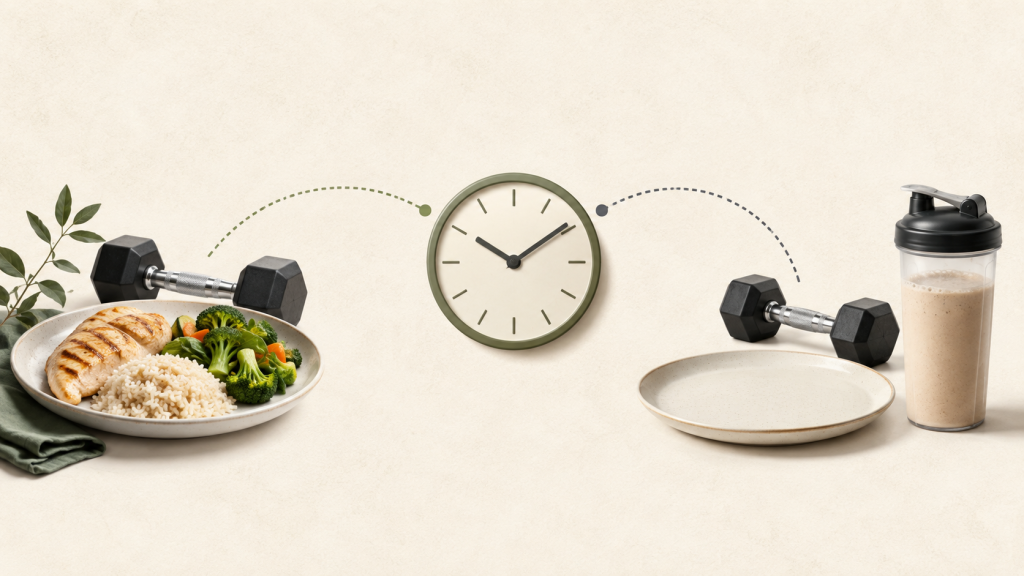
When should you drink a protein shake? The best time is when it helps you meet your total daily protein needs. Around a workout, having protein within a few hours before or after training is practical, but most people do not need to race against a 30 minute clock.
Your last meal, daily protein intake, training schedule and personal goals matter more than an exact minute. If you ate a protein rich meal shortly before exercising, your next normal meal may be enough. If you trained after a long gap without food, a shake before or soon after the workout becomes more useful.
This guide explains how to choose the timing that fits your day.
Does Protein Shake Timing Actually Matter?
Timing matters less than total daily protein and consistent resistance training.
The traditional “anabolic window” was often described as a narrow 30 minute period after exercise. Research does not support such an all or nothing deadline. A 2013 meta analysis found that apparent timing benefits were largely explained by differences in total protein intake. A 2017 trial also found similar muscle and strength results when 25 grams of protein was consumed immediately before versus immediately after resistance training.
That does not make timing useless. It means the window is flexible, especially when you have eaten protein in the hours around your workout.
Before worrying about the clock, focus on three priorities
- Daily protein: The International Society of Sports Nutrition recommends approximately 1.4–2.0 grams per kilogram of body weight per day for most exercising people. Individual needs vary with training, age, health and calorie intake.
- Protein per meal: A useful general target is about 20–40 grams of high quality protein per meal or snack.
- Distribution: Spreading protein across the day often every three to four hours is generally more practical than eating most of it at one meal.
Protein shakes are simply one way to fill a gap. If you are new to them, start with our guide to what a protein shake is.
The Most Important Question: When Did You Last Eat?
A protein containing meal continues to provide amino acids for hours. That is why your last meal is more useful than a stopwatch when deciding whether you need a shake.
| Your situation | Practical timing |
|---|---|
| You ate a protein rich meal 1–3 hours before training | Skip the pre workout shake; eat your next meal or have the shake later |
| Your last meal was 4+ hours before training | Have a light shake 30–60 minutes before, or soon after training |
| You trained fasted in the morning | Have protein soon after finishing, ideally as part of breakfast |
| Lunch and dinner are far apart | Use a shake between meals |
| You train late and will not eat afterward | Have a post workout shake or protein rich snack |
| It is a rest day | Drink it whenever it helps you reach your daily total |
These are flexible guidelines, not medical rules.
Should You Drink a Protein Shake Before or After a Workout?
Both can work.

Before your workout
A pre workout shake is helpful when you have not eaten protein for several hours. A simple shake 30–60 minutes before training is usually easier to digest than a large smoothie containing oats, nut butter and fruit.
If you ate a balanced meal two hours earlier, another shake is unlikely to provide a meaningful advantage. Your body is already digesting and absorbing protein from that meal.
People doing long endurance sessions may also need carbohydrates and fluids before exercise. Protein should not replace the fuel needed for the activity.
After your workout
Having 20–40 grams of protein within roughly two hours after exercise is a convenient target, particularly when you trained without a recent meal. It supports recovery and makes it easier to reach your daily intake.
You do not need a supplement if a normal protein rich meal is coming soon. Chicken, fish, eggs, dairy, soy, beans and other foods can all contribute to recovery.
If you want a simple homemade option, follow our guide on how to make a protein shake.
If you train fasted in the morning
After an overnight fast, eating protein after training is sensible. Have a shake or breakfast soon after you finish rather than delaying food for several more hours.
There is no proven need to divide one serving immediately before and after the workout. Choose the approach that feels comfortable and does not upset your stomach.
Best Protein Shake Timing for Muscle Gain
For muscle gain, think about the entire day rather than one post workout drink.
A person weighing 75 kilograms (165 pounds) who targets 1.6 grams per kilogram would aim for about 120 grams of protein per day. One possible distribution could look like this
| Time | Food or drink | Approximate protein |
| 7:00 a.m. | Eggs and Greek yogurt | 30 g |
| 12:00 p.m. | Chicken, rice and vegetables | 35 g |
| 4:00 p.m. | Protein shake | 25 g |
| 8:00 p.m. | Salmon, potatoes and vegetables | 30 g |
The shake is useful because it fills the afternoon gap not because 4:00 p.m. is a special muscle building time.

What about a pre sleep shake?
Research shows that 30–40 grams of protein, commonly casein, consumed before sleep can be digested overnight and increase overnight muscle protein synthesis. However, this does not mean everyone needs an additional shake before bed.
Pre sleep protein is most useful when it helps you reach your daily target or when dinner was early. If you already consumed enough protein and calories, adding another shake may offer little practical benefit.

Best Timing for Weight Loss
For weight loss, the best time is usually when protein helps control hunger while staying within your calorie target.
Useful times may include:
- At breakfast if your usual breakfast contains little protein
- Between lunch and dinner if afternoon hunger leads to snacking
- After training when a shake prevents an unplanned high calorie meal
Protein can support fullness and help preserve lean mass during a calorie deficit, but a shake does not cause fat loss by itself. Calories still count. A large smoothie with nut butter, oats, honey and full fat milk can contain more energy than a meal.
Use shakes as part of your plan rather than adding them on top of everything you already eat.
Morning or Night: Which Is Better?
Neither is automatically better.
Choose morning when breakfast is low in protein or you struggle to reach your daily target. Choose night when dinner is early, you train in the evening or a protein rich snack helps you avoid less nutritious late night choices.
The best time is the one that solves a real gap in your diet and that you can maintain consistently.
Should You Drink Protein Shakes on Rest Days?
Yes, if you need one to reach your normal protein intake.
Recovery continues after the workout, so your protein needs do not disappear on rest days. Keep eating balanced protein rich meals. Place the shake wherever your diet falls short perhaps at breakfast or between meals.
A shake is not mandatory. If whole foods already provide enough protein, you can skip it.
Does Protein Type Change the Timing?
The differences are smaller than supplement marketing often suggests.
- Whey: A complete dairy protein that is convenient around workouts.
- Casein: A slower digesting dairy protein often used before sleep.
- Soy: A complete plant protein that can support muscle protein synthesis.
- Pea and rice: Both contain all essential amino acids, but their proportions differ. Blending them can create a more balanced amino acid profile.
- Egg: A high quality complete protein for people who tolerate eggs.
- Collagen: Useful for specific connective tissue purposes but relatively low in leucine and not an ideal primary muscle building protein.
Choose a product you tolerate, enjoy and can afford. Total intake and consistency matter more than small differences in digestion speed.
How Many Protein Shakes per Day?
One shake is enough for many people. Some may use two when food alone does not meet their needs.
The right number depends on how much protein you already obtain from meals. Whole foods provide vitamins, minerals, fiber and other nutrients that powders may lack, so shakes should normally supplement not dominate your diet.
For a complete explanation, read how many protein shakes a day may be appropriate.
Timing Considerations for Older Adults
Older adults may experience anabolic resistance, meaning muscle responds less strongly to a small protein dose. Research and sports nutrition guidance suggest that some older adults may benefit from protein servings toward the higher end of the general 20–40 gram range.
This does not make a bedtime shake mandatory. A better first step is to include adequate protein at breakfast, lunch and dinner and combine it with appropriate resistance exercise.
Older adults with kidney disease, diabetes, swallowing problems or other medical conditions should ask a doctor or registered dietitian for individualized guidance before substantially increasing protein intake.

Common Protein Timing Mistakes
Treating a shake as free calories
A protein shake still contributes calories. Include it in your daily intake rather than automatically adding it to an unchanged diet.
Obsessing over minutes while missing the daily target
Being consistently short of protein matters more than whether your shake was consumed 30 or 90 minutes after training.
Replacing too many meals
Shakes are convenient, but varied whole foods should provide most of your nutrition.
Ignoring the label and product quality
In the United States, the FDA regulates dietary supplements differently from conventional foods and drugs and does not approve them for safety and effectiveness before sale. Manufacturers are responsible for safety and truthful labeling, while the FDA can act against adulterated or misbranded products after they reach the market.
Choose products with clear ingredient labels and consider independent certification, such as NSF Certified for Sport or Informed Sport, when contamination or banned substances are a concern.
Assuming more protein is always better
Research in healthy adults has not shown that typical higher protein diets automatically damage healthy kidneys, but long term evidence has limitations. People with kidney disease or other relevant medical conditions may need different targets and should seek professional advice.
The Bottom Line
Drink a protein shake when it helps you meet your daily protein needs.
If you have not eaten for several hours, use it before or soon after training. If you ate a protein rich meal before your workout, there is no need to rush. On rest days, use a shake only when your meals leave a gap.
Your daily protein intake, distribution, food quality and consistent training matter more than hitting a perfect minute on the clock. Protein shakes can support those habits, but they do not replace them.
To understand the broader effects, read what protein shakes actually do to your body.
Medical disclaimer: This article is for general educational purposes and is not a substitute for personalized advice from a doctor or registered dietitian. Ask a qualified healthcare professional before substantially changing your protein intake if you have kidney disease, liver disease, diabetes, food allergies, are pregnant, or have another medical condition.
References
- Jäger R, et al. International Society of Sports Nutrition Position Stand Protein and Exercise. Journal of the International Society of Sports Nutrition. 2017.
- Schoenfeld BJ, Aragon AA, Krieger JW. The Effect of Protein Timing on Muscle Strength and Hypertrophy. Journal of the International Society of Sports Nutrition. 2013.
- Schoenfeld BJ, et al. Pre- Versus Post-Exercise Protein Intake Has Similar Effects on Muscular Adaptations. PeerJ. 2017.
- Kerksick CM, et al. International Society of Sports Nutrition Position Stand Nutrient Timing. 2017.
- Kouw IWK, et al. Protein Ingestion Before Sleep Increases Overnight Muscle Protein Synthesis Rates in Healthy Older Men. The Journal of Nutrition. 2017.
- Mariotti F, Gardner CD. Dietary Protein and Amino Acids in Vegetarian Diets—A Review. Nutrients. 2019.
- U.S. Food and Drug Administration. Questions and Answers on Dietary Supplements.
- Devries MC, et al. Changes in Kidney Function Do Not Differ Between Healthy Adults Consuming Higher- Compared With Lower-Protein Diets. The Journal of Nutrition. 2018.