How to Make a Protein Shake: Step-by-Step (With or Without Powder)
Most people’s first protein shake is bad. Chalky, half-dissolved, a layer of powdery sludge at the bottom of the shaker bottle, and a swallow of dry protein powder at the end that ruins the whole thing.
That isn’t the powder’s fault. It’s almost always the order you added things, the amount of liquid you used, or the temperature of that liquid three things nobody bothers to explain.
This covers all of it the ratio, the method, what changes when you swap water for milk, how to make one with no powder at all, and how to fix a shake that’s already gone wrong.
The Formula Behind Every Protein Shake
Almost every recipe online says “one scoop and some liquid.” That’s useless when you’re standing at the counter wondering how much some is.
Here’s the actual ratio
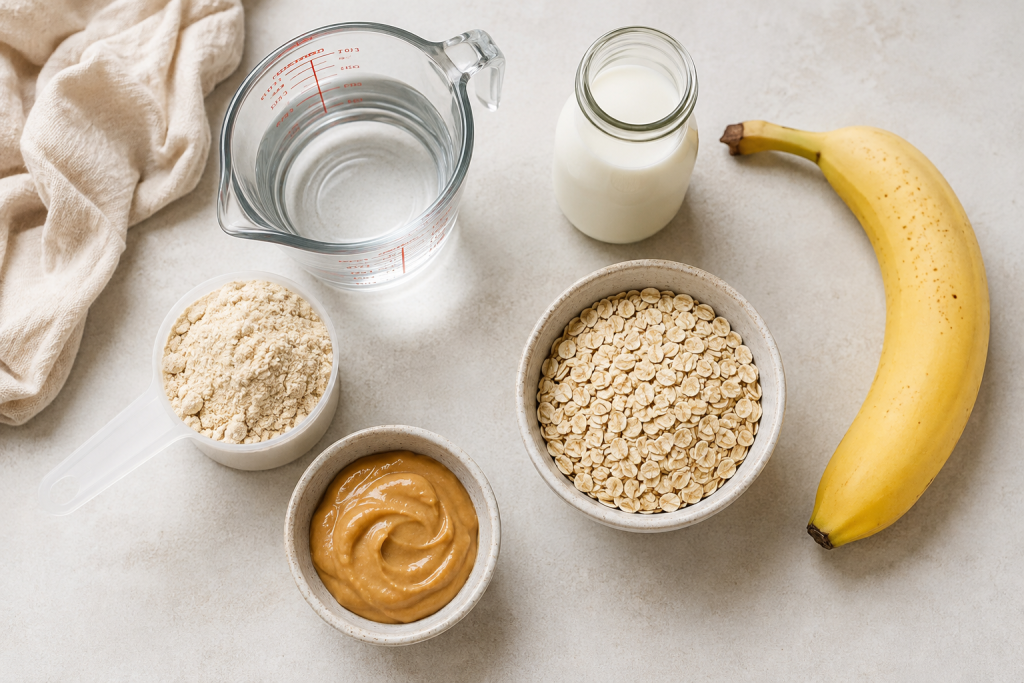
1 scoop of protein powder (roughly 30 g) 250–300 ml of liquid
That’s your baseline for a standard-thickness shake. From there, thickness is entirely a function of liquid volume
| You want | Liquid per scoop | Result |
|---|---|---|
| Thin, refreshing | 350–400 ml | Light, drinks like juice best for clear whey |
| Standard | 250–300 ml | The default. Smooth, not heavy |
| Thick, creamy | 180–220 ml | Milkshake territory, more filling |
| Spoonable | 120–150 ml + frozen fruit | Closer to a smoothie bowl |
Once you’re blending in extras, the formula extends
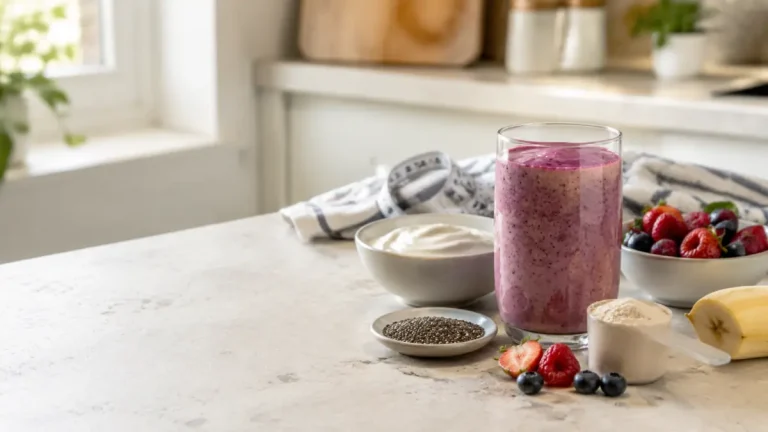
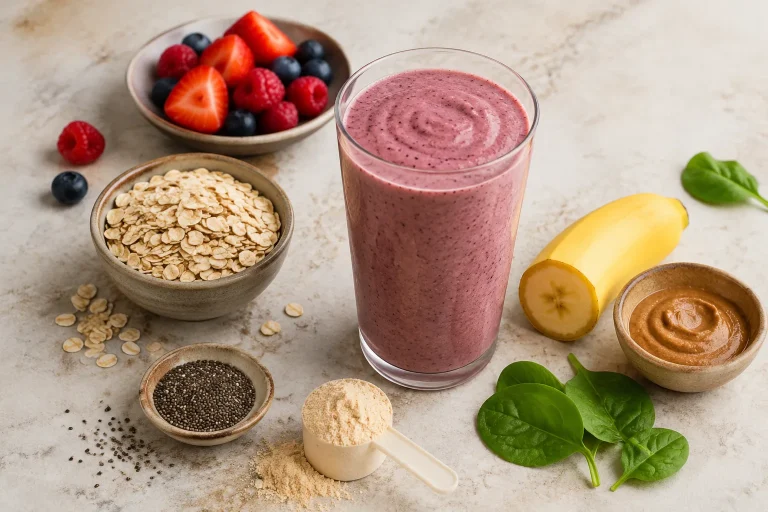
Liquid + protein source + one thickener + one flavour + optional fat
- Liquid: 250 ml of water, dairy milk, almond milk, oat milk, soy milk or coconut water
- Protein: 1 scoop of powder, or a whole-food source (covered below)
- Thickener: frozen banana, rolled oats, Greek yogurt, avocado, or ice
- Flavour: cocoa powder, cinnamon, vanilla extract, frozen berries, medjool dates
- Fat: a spoon of peanut butter, almond butter, chia seeds or flaxseed
Learn that skeleton and you never need another recipe.
What You Actually Need Shaker, Blender, or Neither
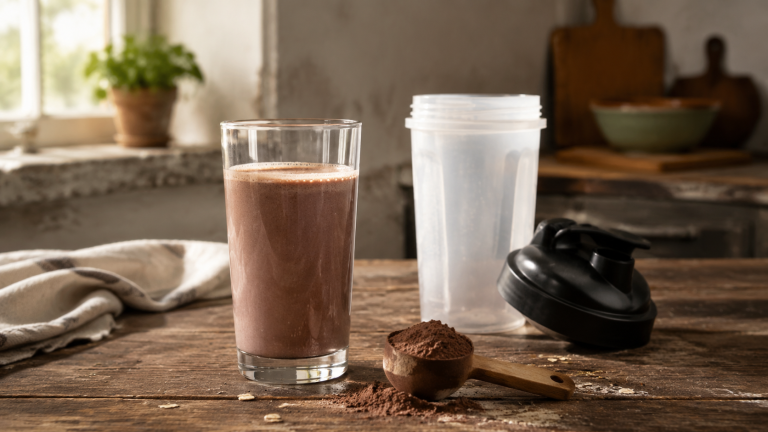
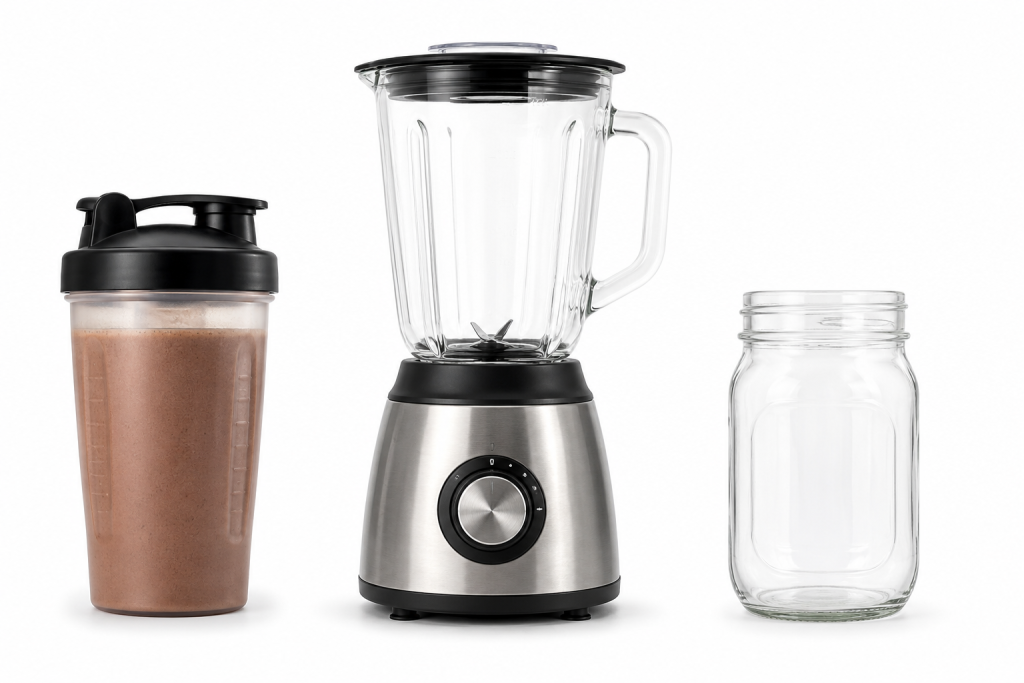
A shaker bottle is the fastest option and fine for powder-only shakes. What matters is the mixer inside it. A stainless steel mixing ball breaks up powder mechanically on contact, so you need far less shaking and less shaking means less foam. A wire whisk ball or mesh filter works nearly as well. Bottles with nothing inside are the reason most people think their powder is faulty.
A blender is non-negotiable the moment you add solids. Frozen fruit, oats, nut butter, silken tofu, avocado none of these break down in a shaker, and a high-speed blender is what gets you genuinely smooth mouthfeel.
Neither? You can still do it. Pour about a quarter of your liquid into a mug or mason jar, add the powder, and stir hard with a fork until the paste is completely lump-free. Then add the rest of the liquid and stir again. It takes ninety seconds and works better than a bad shaker.
How to Make a Protein Shake With Powder Step by Step
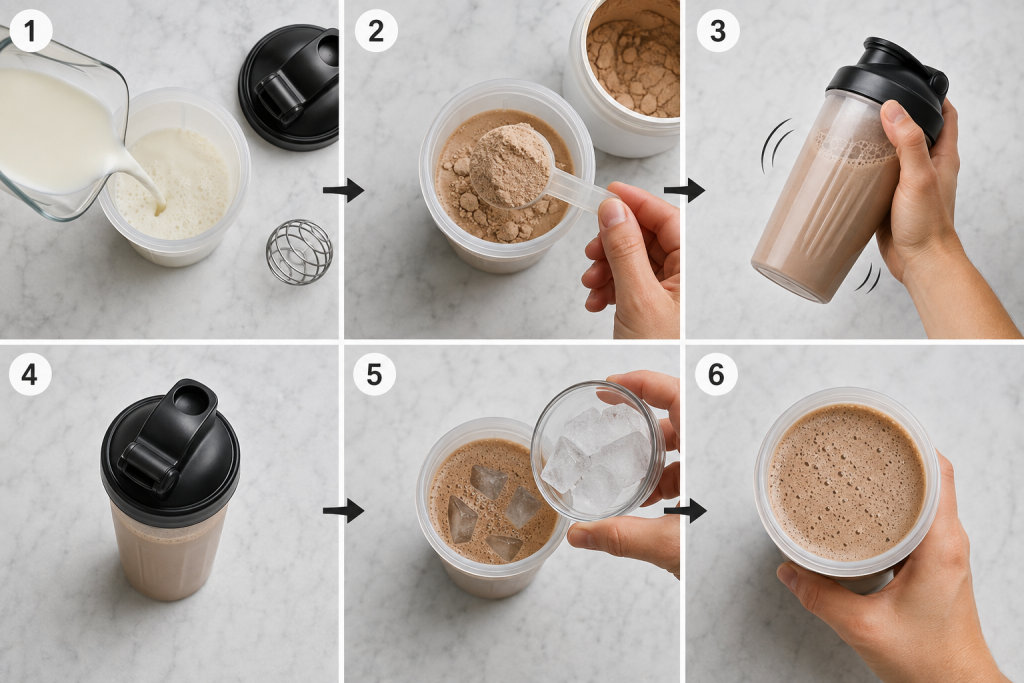
1. Liquid goes in first. This is the single fix for clumps, and it solves the problem for most people on its own. Dry powder hitting dry plastic sticks to the base and corners, and liquid poured on top can’t reach it. Fill your bottle 60–70% with liquid, then add the powder on top.
2. Use cold liquid. Use cool or cold liquid for the smoothest texture. Very hot liquid can make some whey powders clump. For protein coffee, first mix the powder with a small amount of cool liquid, then gradually stir it into warm coffee
3. Add one scoop. Check your label rather than assuming; serving sizes vary from 25 g to 45 g between brands.
4. Seal it and shake for 20–30 seconds. Moderately, not violently. Aggressive shaking whips air into the liquid the emulsifiers in most powders, usually sunflower lecithin or soy lecithin, are very good at trapping those air bubbles, which is exactly how you end up with two inches of froth.
5. Let it sit for 30 seconds. The powder finishes hydrating and most of the foam collapses. Skipping this is why shakes taste grittier at the start than the end.
6. Add ice last if you want it colder. Ice adds turbulence in a manual shaker, which helps break remaining lumps. Don’t put ice in an electric shaker unless the manual says the blade can handle it.
Water or Milk? What Actually Changes
Yes you can absolutely make a protein shake with water, and for a lot of people it’s the better choice. Here’s what actually shifts.
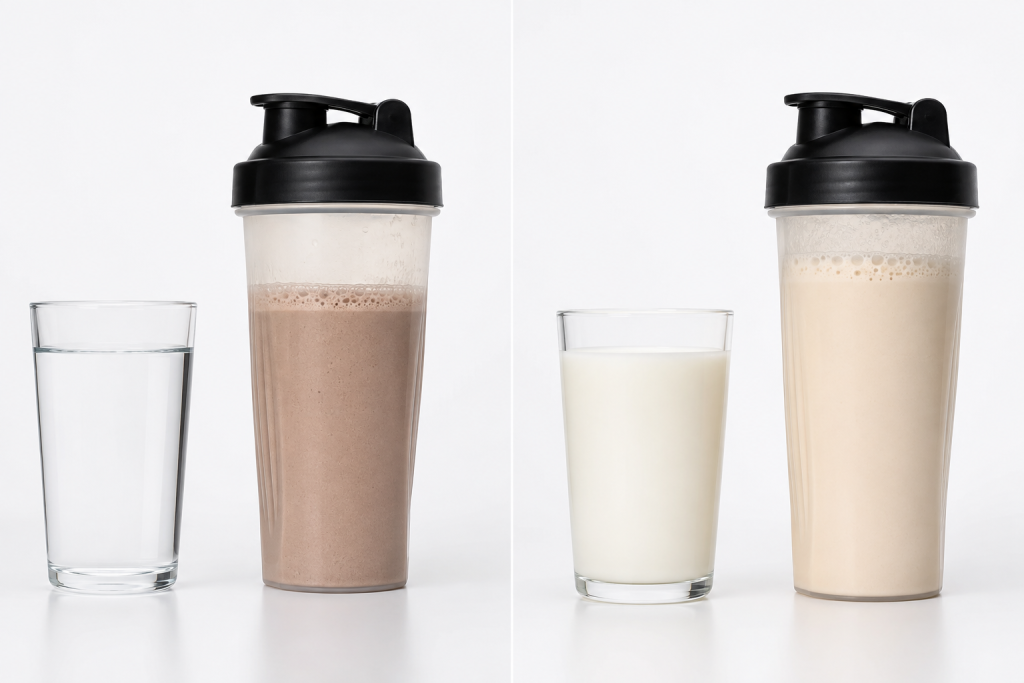
Water gives you a thinner, lighter drink with zero added calories. It’s the right call if you’re in a calorie deficit, if you’re lactose intolerant, if you’re mixing clear whey or a fruity flavour, or if you just want something you can fill up anywhere. It also digests marginally faster, though the difference matters far less than the internet suggests.
Milk adds roughly 100–150 calories per 250 ml, plus about 8–12 g of extra protein, along with calcium, vitamin D and potassium. It creates the creaminess that masks chalkiness, which is why chocolate and vanilla powders taste dramatically better with it. The casein naturally present in milk also slows digestion, giving a steadier release of amino acids useful before bed, less useful straight after training.
A rule that works Choose water for a lighter shake or milk for additional protein, carbohydrates and creaminess. The better option depends on your total diet, calorie needs, taste and tolerance.
Plant milks sit between the two. Soy milk carries the most protein of the group at around 7 g per cup. Almond milk is the lowest in calories but adds almost no protein. Oat milk is creamy but higher in carbohydrates. Check the label if your macros are tight.
How to Make a Protein Milk Shake (Thick and Creamy)
If what you actually want is something closer to a dessert
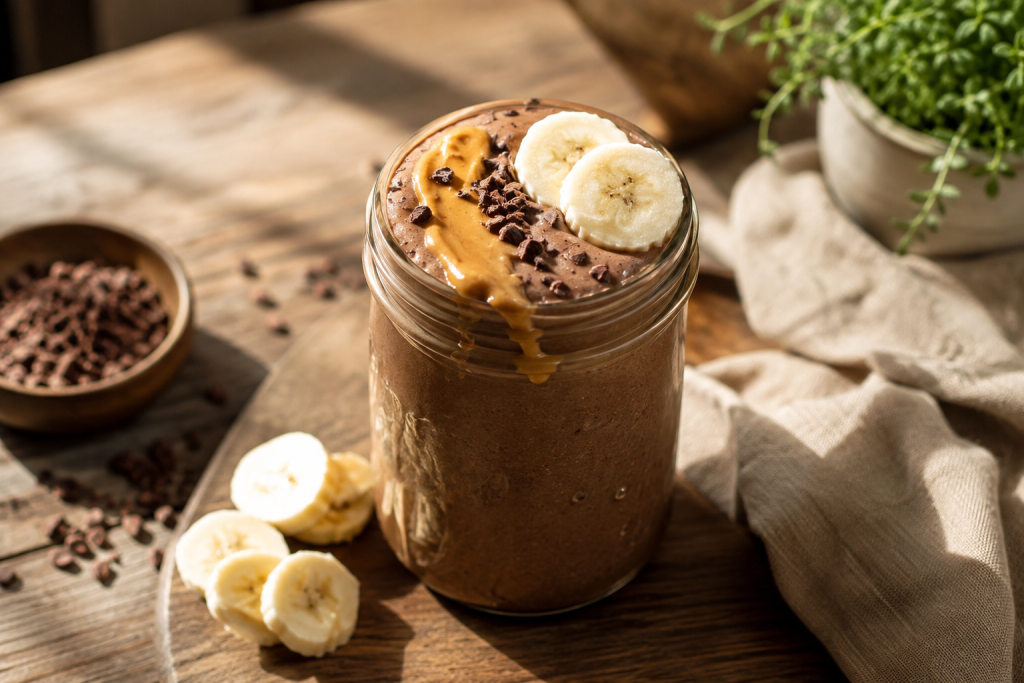
- 200 ml whole milk (less liquid = thicker)
- 1 scoop chocolate or vanilla whey protein
- 1 frozen banana
- 1 tbsp peanut butter
- ½ tsp vanilla extract
- 4–5 ice cubes
Blend for 45 seconds. The frozen banana is doing most of the work it thickens without diluting the way plain ice does, and adds natural sweetness so you don’t need honey or maple syrup.
For an even richer result, swap 50 ml of the milk for Greek yogurt, or add half an avocado. Avocado sounds wrong and tastes like nothing it just makes the texture silky.
Making a Whey Protein Shake Specifically
Whey is the most common powder and has quirks worth knowing.
Whey concentrate foams more than isolate because it retains more fat and lactose. If froth bothers you, isolate mixes cleaner. Whey isolate also dissolves faster and suits water better.
Clear whey is a different product entirely it’s designed for water only and produces a light, juice-like drink. Mixing it with milk gives you a curdled, unpleasant result. Fruity flavours belong in water; dessert flavours belong in milk.
Never mix whey into hot coffee or tea directly. If you want a coffee protein shake, brew it and let it cool completely first, or pour it over ice before adding powder.
Store the tub somewhere dry and stable. Humidity makes powder clump inside the container, and no amount of shaking fixes a lump that formed before it hit the liquid break those up with a fork or sift the powder first.
How to Make a Protein Shake Without Powder
You don’t need powder at all. Plenty of whole foods blend well and deliver comparable grams of protein.
The high-protein bases
| Ingredient | Protein | Notes |
|---|---|---|
| Greek yogurt, 1 cup | ~20 g | The best all-rounder thick and neutral |
| Cottage cheese, ½ cup | ~14 g | Blends completely smooth, surprisingly |
| Silken tofu, 100 g | ~8 g | Vegan, no flavour, creamy texture |
| Ricotta, ¾ cup | ~20 g | Rich, works with berries |
| Milk, 1 cup | ~8 g | Base and protein at once |
| Soy milk, 1 cup | ~7 g | Highest-protein plant milk |
| Peanut butter, 2 tbsp | ~7 g | Also adds healthy fats |
| Hemp hearts, 3 tbsp | ~10 g | Omega-3s, blends creamy |
| Pumpkin seeds, ¼ cup | ~9 g | Needs a high-speed blender |
| Rolled oats, ⅓ cup | ~5 g | Thickener plus fibre |
| White beans, ½ cup | ~7 g | Sounds odd, tastes neutral |
Blending order matters more without powder. Liquid first, then soft items like yogurt or tofu, then hard items like nuts and seeds, then frozen fruit last. That sequence stops dense ingredients wedging under the blade.
One safety note the old recipe sites get wrong. A lot of legacy protein shake recipes still call for raw egg whites. Don’t. Raw eggs carry a salmonella risk, and raw egg white contains avidin, which blocks biotin absorption. If you want the protein, use pasteurised liquid egg whites sold in cartons same result, none of the risk.
Five Homemade Protein Shake Recipes
Each blends in under two minutes. Protein counts are approximate and shift with brands.
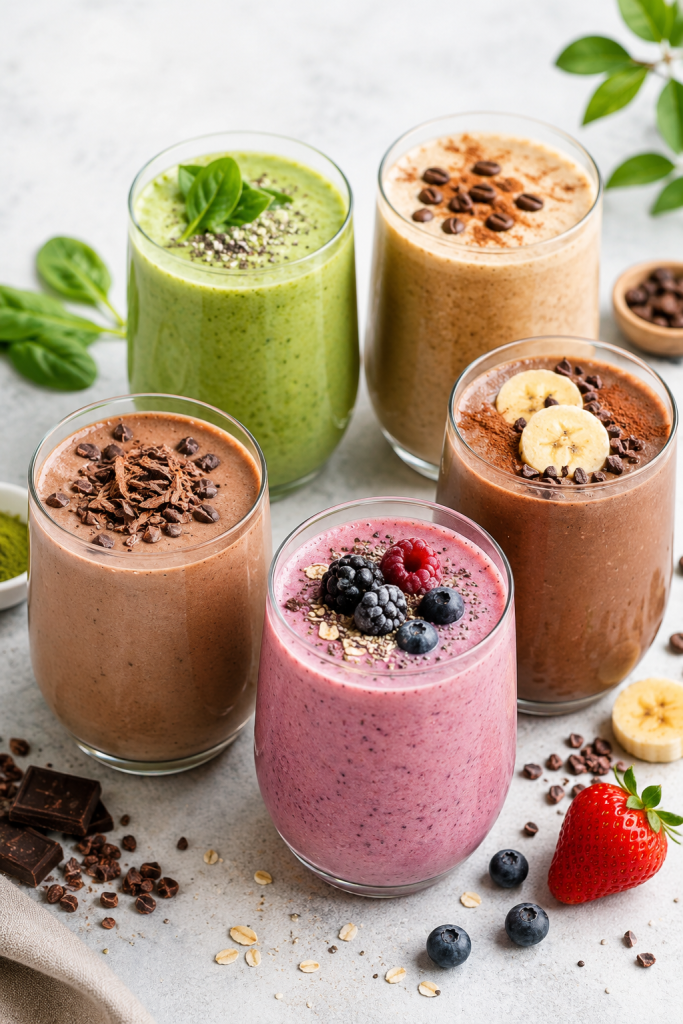
Chocolate Peanut Butter 34 g 250 ml milk, 1 scoop chocolate whey, 1 frozen banana, 1 tbsp peanut butter, 1 tsp cacao powder.
Green Breakfast 27 g 250 ml soy milk, ¾ cup Greek yogurt, a large handful of spinach, ½ frozen mango, 1 tbsp chia seeds. The spinach vanishes into the mango.
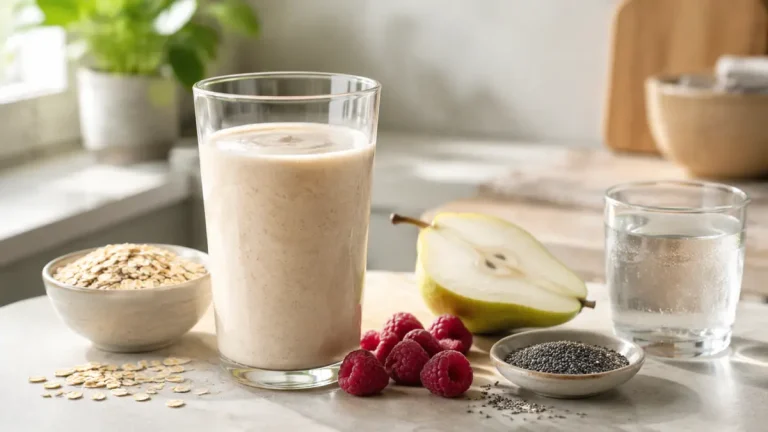
Berry Oat, no powder 22 g 250 ml milk, ½ cup cottage cheese, 1 cup frozen berries, ⅓ cup rolled oats, 1 tsp honey.
Iced Coffee 30 g 200 ml cold brewed coffee, 100 ml milk, 1 scoop vanilla whey, 4 ice cubes, a pinch of cinnamon. Cool the coffee fully first.
Vegan Chocolate, no powder 24 g 250 ml soy milk, 100 g silken tofu, 1 frozen banana, 2 tbsp hemp hearts, 1 tbsp cacao powder, 2 medjool dates.
A balanced shake can also work as a convenient high-protein breakfast
Fixing a Bad Shake
| Problem | Cause | Fix |
|---|---|---|
| Clumps | Powder added before liquid | Liquid first, always. Use a mixing ball |
| Foam or froth | Over-shaking, emulsifiers trapping air | Shake gently, use cold liquid, rest 30 seconds |
| Grit or chalkiness | Under-mixed, or plant protein’s natural texture | Blend instead of shake, or switch to a creamier base |
| Too thin | Too much liquid | Cut to 200 ml, add frozen banana or oats |
| Too thick | Not enough liquid | Add 50 ml at a time |
| Stringy or curdled | Hot liquid denatured the whey | Cold liquid only |
| Bland | Water plus an unflavoured or weak powder | Add cinnamon, cocoa, vanilla, or a pinch of salt |
| Lumps in the tub | Humidity during storage | Break up with a fork or sift before mixing |
How to Make It Actually Taste Good
A pinch of salt. It sounds strange and it’s the most effective single upgrade salt suppresses bitterness and makes sweetness read stronger, which is exactly what a flat-tasting powder needs.
Beyond that cinnamon in vanilla, espresso in chocolate, frozen berries to cut sweetness, shredded coconut for body, and vanilla extract in anything unflavoured. Serve everything genuinely cold temperature does more for a shake’s mouthfeel than any ingredient.
If a powder still tastes bad with milk, a banana and a pinch of salt, the powder is the problem. Stop trying to rescue it.
Making It Ahead and Storing It
A mixed shake keeps in the fridge for 24 hours, though 4–6 hours is where texture stays best. It’ll separate shake it again before drinking, that’s normal.
Never leave a mixed shake at room temperature for more than two hours, or more than one hour when the temperature is above 90°F (32°C). Dairy and blended fruit are perishable, so refrigerate the shake promptly.
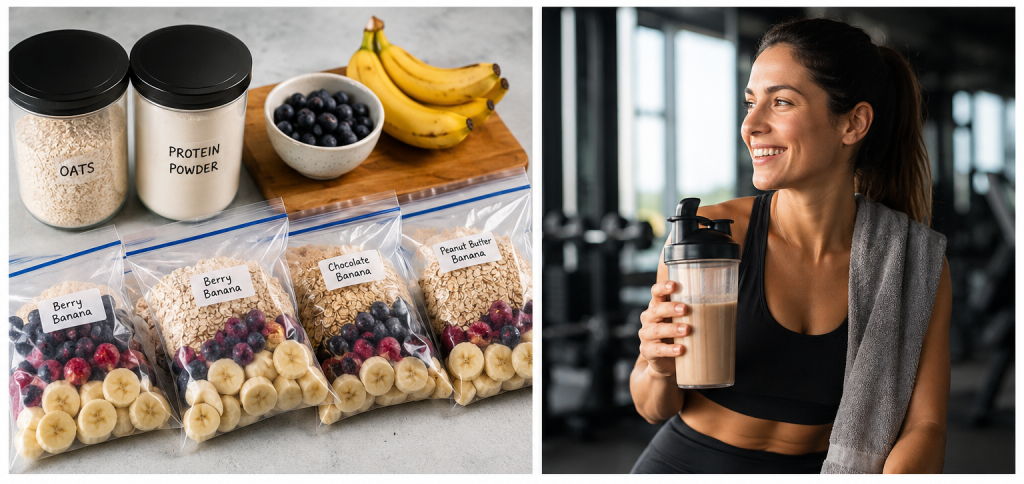
For genuine meal prep, portion the dry ingredients into containers or bags and add liquid only when you’re ready to blend. Frozen fruit portioned into freezer bags works the same way tip the bag in, add liquid, blend.
Mistakes That Ruin a Homemade Shake
Powder before liquid. Still the number one cause of every clump complaint.
Shaking like you’re angry at it. More force means more foam, not better mixing.
Very hot liquid can cause some whey powders to clump. Mix the powder with a little cool liquid first, then gradually stir it into a warm drink.
Building a smoothie and calling it a shake. Banana, mango, honey, oat milk and granola is a lovely drink at 500 calories. Know which one you’re making.
Adding a second scoop for “more gains.” Adding a second scoop is not automatically better. A commonly cited serving range is 20–40 grams of high-quality protein, but an appropriate amount depends on body size, age, activity and total daily intake. Protein consumed beyond the amount needed to maximize muscle protein synthesis is not simply “wasted”; the body can use amino acids for other functions
Using a shaker for solid ingredients. Oats, nut butter and frozen fruit need a blender. A shaker just redistributes them.
Ignoring the ratio. Most bad shakes are a liquid problem, not a powder problem