What Do Protein Shakes Actually Do to Your Body? Do They Work?
What do protein shakes do to your body, and do they work? In simple terms, a protein shake is a convenient way to add protein to your diet. It does not contain a secret muscle-building ingredient, and drinking one does not automatically create muscle or burn body fat.
Protein shakes can work but only for specific purposes. They may help you reach your daily protein target, support muscle repair alongside resistance training, or make a calorie-controlled diet easier to follow. Whether a shake produces a noticeable result depends on what you eat, how you train, and whether you needed the additional protein in the first place.
Let’s look at what actually happens when you drink one.
What Is a Protein Shake?
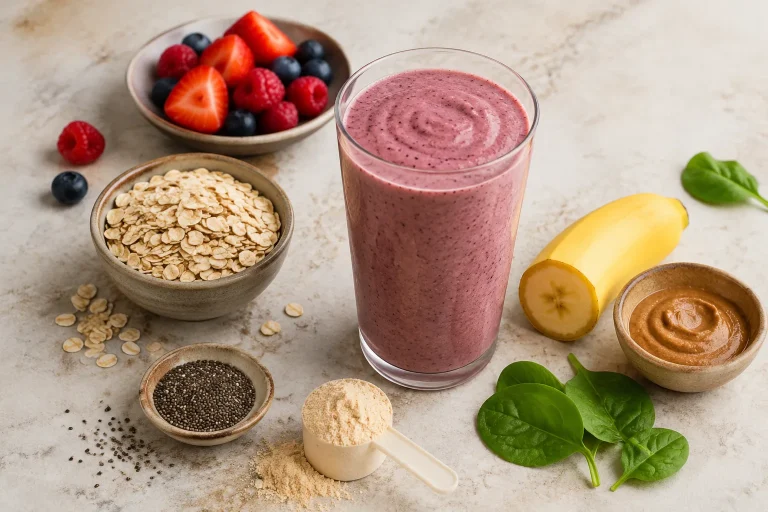
A protein shake is a drink containing a concentrated source of protein. It may be made by mixing powder with water, milk or another liquid, or it may come ready to drink in a bottle.
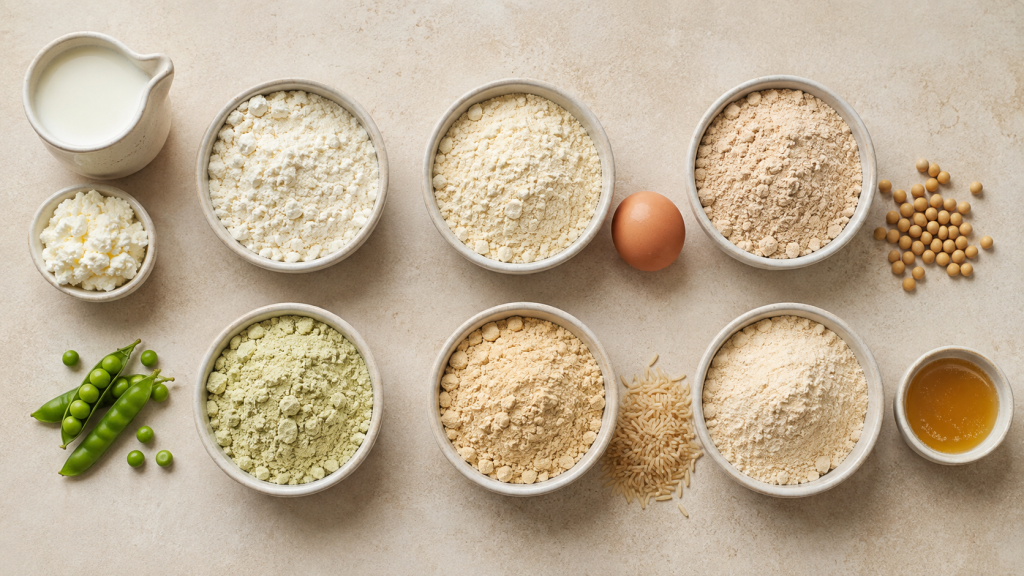
Many products provide approximately 20–30 grams of protein per serving, although amounts vary. Common protein sources include
Animal-derived proteins
- Whey
- Casein
- Egg white
- Collagen
Plant-derived proteins
- Soy
- Pea
- Rice
- Hemp
- Blends of several plant proteins
Protein powders sold as dietary supplements are regulated by the FDA under a different framework from conventional foods and drugs. Some ready-to-drink products may instead be marketed as conventional foods, depending on their labeling and intended use.
Products may also contain added sugar, sweeteners, flavorings, oils, gums, vitamins or minerals. That is why the Nutrition Facts or Supplement Facts panel matters more than the word “protein” on the front of the package.
If you are new to shakes, start with our complete beginner’s guide to protein shakes.
What Happens After You Drink a Protein Shake?
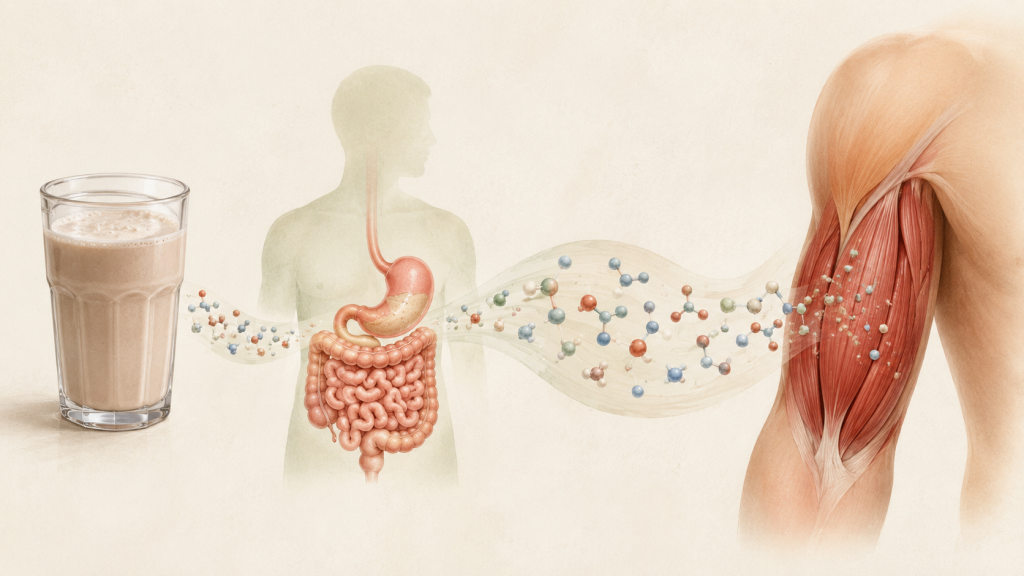
The exact speed varies with the protein source, serving size, other ingredients, and your individual digestion. There is no single minute-by-minute timeline that applies to everyone, but the overall process is straightforward.
1. Your digestive system breaks the protein down
Stomach acid and digestive enzymes break dietary proteins into smaller peptides and amino acids. These are then absorbed mainly through the small intestine.
Liquid whey is generally digested more rapidly than casein or a mixed solid meal, but adding fats, fiber or other ingredients can slow digestion.
2. Amino acids enter your bloodstream
After absorption, amino acids become available for many jobs throughout the body. They are used to build and maintain proteins in muscles, skin and other tissues, and to produce enzymes, transport proteins and other important compounds.
3. Muscle protein synthesis can increase
Essential amino acids particularly leucine help stimulate muscle protein synthesis, the process through which muscle proteins are built and renewed.
Resistance exercise makes muscle more responsive to dietary protein. This is why protein and strength training work together training provides the stimulus, while adequate nutrition supplies the building materials.
4. Protein may help you feel full
Protein is generally more satiating than carbohydrate or fat. A protein shake may therefore help control appetite, especially when it replaces a lower-protein snack. However, a drink may be less satisfying than a solid meal for some people, and results depend heavily on the recipe.
5. Digestion itself uses some energy
The body uses energy to digest, absorb and process food. Protein generally has a higher thermic effect than carbohydrate or fat. This does not turn a shake into a fat-burning product, but it is one reason higher-protein diets may modestly influence energy expenditure and appetite.
The body does not maintain a dedicated storage tank for excess protein. Amino acids that are not needed for protein synthesis or other functions can be broken down. Their nitrogen is excreted, while the remaining components may be used for energy or contribute to glucose or fat production depending on the body’s energy state.
Do Protein Shakes Work for Building Muscle?
Yes when combined with resistance training and when they help you consume enough total protein.
A large systematic review and meta-analysis found that protein supplementation enhanced gains in muscle size and strength during prolonged resistance training in healthy adults. The benefit became smaller once total protein intake was already sufficient.
That final point matters. If your meals already provide enough protein, adding another shake may produce little additional muscle-building benefit. If you regularly fall short, a shake can be a convenient way to close the gap.
For many exercising adults, a daily protein intake in the general range of 1.4–2.0 grams per kilogram of body weight is commonly recommended. Needs vary with training, age, calorie intake and health.
Protein shakes do not replace progressive resistance training, recovery, sleep or adequate calories. They support the process; they do not create the training signal.

Do Protein Shakes Work for Weight Loss?
Protein shakes do not directly burn body fat. They may support weight loss indirectly when they help you maintain a calorie deficit.
They can help by
- Increasing protein intake and fullness
- Replacing a higher-calorie snack or meal
- Helping preserve lean mass during weight loss, especially with resistance training
- Providing a controlled serving with known calories
But the calories still count. A powder-and-water shake might contain around 120–160 calories, while a shake made with whole milk, oats, banana and nut butter can contain 600 calories or more.
Adding shakes on top of your normal diet without adjusting anything else can slow weight loss or lead to weight gain. The useful question is not “Does this shake burn fat?” but “Does this shake help my overall eating plan?”

Do Protein Shakes Help with Recovery?
Adequate protein supports the repair and remodeling of muscle tissue after exercise. A shake can be helpful after training because it is quick and easy, particularly when a normal meal is not available.
You do not need to finish it within a strict 30-minute “anabolic window.” Research suggests that total daily protein intake is more important than consuming a shake at one exact moment. A post-workout shake is convenient, not mandatory.
What Protein Shakes Cannot Do
They cannot build substantial muscle without training
Protein supports muscle maintenance throughout life, but noticeable muscle growth normally requires a sufficient training stimulus most effectively resistance exercise.
They do not directly burn fat
Any weight-loss benefit comes from their effect on fullness, calorie control and lean-mass retention not from a special fat-burning action.
They are not automatically better than food
Whole foods can provide protein along with fiber, vitamins, minerals and dietary variety. Shakes are mainly a convenience tool.
They cannot repair an otherwise poor diet
Adding a shake does not compensate for a diet lacking fruits, vegetables, whole grains and other nutrient-rich foods.
They are not required for fitness
You can meet protein needs through food alone. Powder is useful only when it makes that target more practical.
Why Do People Drink Protein Shakes?
People use them for more than bodybuilding
- Convenience: A shelf-stable powder or bottled drink is easier to carry than a prepared meal.
- Low appetite: Drinking protein may feel easier than eating another solid meal.
- Vegetarian or vegan diets: Soy, pea and blended plant proteins can provide a concentrated option without animal products.
- Older age: Some older adults struggle to eat enough protein, although individual needs and medical conditions should be considered.
- Calorie-restricted diets: Protein can be harder to maintain when total food intake decreases.
- Clinical recovery: Protein needs may change during illness, injury or recovery, but a clinician or dietitian should guide supplementation in these situations.
- GLP-1 medication use: Reduced appetite can make adequate nutrition more difficult. Anyone using these medications should discuss protein, hydration and overall intake with their prescribing clinician rather than relying on shakes alone.
Can Your Body Use More Than 30 Grams of Protein at Once?
Yes. Your body can digest and absorb more than 30 grams of protein in one meal.
The confusion comes from studies measuring the short-term muscle protein synthesis response. For many young adults, approximately 20–40 grams of high-quality protein per meal is commonly suggested as a practical range for maximizing that response, although requirements vary with body size, age and training.
That does not mean every gram above 30 is wasted. Absorbed amino acids can support other tissues and body functions, reduce protein breakdown, or be used over a longer period.
Spreading protein across several meals remains a practical strategy, but an occasional meal containing more than 30 grams is not automatically useless.
Do Protein Shakes Work Without Exercise?
They still provide protein, so they can help someone meet a genuine dietary need even without exercise. Protein supports normal tissue maintenance and numerous biological functions.
However, a shake will not create visible muscle growth by itself. If a sedentary, healthy adult already meets the RDA of 0.8 g/kg per day through food, adding a shake may simply add calories without producing a noticeable benefit.
Older adults, people eating very little, and people with medically increased needs are different cases and may require individualized guidance.
Are All Protein Shakes Equally Effective?
No. Protein sources differ in digestibility and amino-acid composition.
- Whey: A complete protein rich in essential amino acids and leucine. It is rapidly digested and widely studied in sports nutrition.
- Casein: Also a complete milk protein, but generally digested more slowly than whey.
- Egg white: A complete, high-quality protein and a dairy-free option.
- Soy: A complete plant protein with all nine essential amino acids.
- Pea and rice: Both contain all essential amino acids, but each is relatively low in particular amino acids. Combining them can create a more balanced profile.
- Collagen: Low in some essential amino acids and not a complete protein. It should not be your main protein source for maximizing muscle protein synthesis.
Plant proteins can still support training adaptations. Total dose, digestibility and amino-acid profile all matter, and some plant products use blends or larger servings to provide a suitable essential-amino-acid amount.
Who Is Most Likely to Benefit?
A shake may be worthwhile if:
- You perform resistance training and consistently fall short of your protein target.
- You follow a vegetarian or vegan diet and want a concentrated protein option.
- Your schedule regularly makes balanced meals difficult.
- Reduced appetite makes it hard to meet a clinician-recommended protein goal.
- You are dieting and want a measured, protein-rich option.
It may not offer much value if:
- You already meet your protein needs comfortably through food.
- You expect it to build muscle without training.
- You are using it only because the packaging makes it appear healthy.
Track your normal intake for several days before deciding. Our guide to how many protein shakes a day may be appropriate can help you calculate the gap.
Possible Side Effects
Common problems include:
- Gas, bloating, cramps or diarrhea
- Constipation when the overall diet is low in fiber or fluid
- Symptoms from lactose in whey concentrate
- Reactions to milk, soy or other allergens
- Excess calories from large homemade shakes
- Digestive symptoms from sugar alcohols, gums or very large servings
Whey isolate usually contains less lactose than whey concentrate, but it is still derived from milk and is not appropriate for someone with a milk-protein allergy.
Stop using a product and seek urgent medical care if you develop signs of a serious allergic reaction, such as difficulty breathing or swelling of the lips, tongue or throat.
How to Choose a Protein Powder
Protein powders sold as dietary supplements are regulated by the FDA, but the FDA does not approve them for safety and effectiveness before marketing. Manufacturers are responsible for safety, labeling and compliance, while much FDA enforcement occurs after products enter the market.
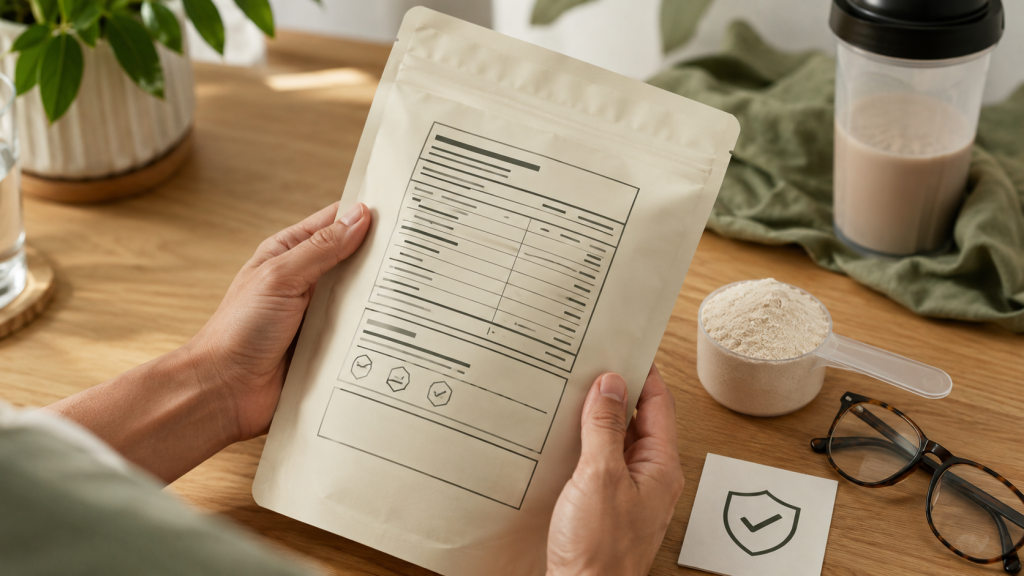
When shopping, check:
- Protein and calories per serving
- Added sugar and serving size
- Milk, soy and other allergens
- Whether the product contains stimulants or unnecessary blends
- Testing from an independent certification program
- The reputation of the manufacturer and seller
Certifications such as NSF Certified for Sport, Informed Sport or USP Verified can provide additional assurance, but programs differ in what they test and certify.
Independent investigations have detected heavy metals in some protein products. The presence of a detectable amount does not by itself establish that a product is dangerous; dose, frequency and the testing benchmark matter. People using a powder daily should favor transparent manufacturers and credible independent testing.
What About Kidney Health?
Research in healthy adults has generally not shown that typical higher-protein diets cause measurable kidney damage over the periods studied. However, evidence on extremely high intakes over many years is limited.
People with chronic kidney disease, reduced kidney function or certain other medical conditions may need a restricted or individualized protein intake. That decision belongs with a physician or registered dietitian.
The Bottom Line
Protein shakes work because they provide protein conveniently not because the shake itself has special powers.
They can help support muscle growth when combined with resistance training, make it easier to reach a protein target, and assist a calorie-controlled diet when used strategically. They will not build muscle without an adequate training stimulus, directly burn fat, or replace a balanced diet.
If your normal food intake already meets your needs, a shake may offer little beyond convenience. If you consistently fall short, it can be a practical tool.
Learn how to make a protein shake step by step and choose the serving based on your full-day intake rather than marketing promises.
Medical disclaimer: This article provides general educational information and is not a substitute for individualized medical or nutrition advice. Consult a qualified healthcare professional before substantially changing your diet if you have a medical condition, are pregnant, are under 18, or take medication that affects appetite, digestion or kidney function.
Sources
- Morton RW, et al. Protein supplementation and resistance training-induced gains in muscle mass and strength: systematic review and meta-analysis. British Journal of Sports Medicine. 2018.
- Jäger R, et al. International Society of Sports Nutrition position stand: protein and exercise. Journal of the International Society of Sports Nutrition. 2017.
- Schoenfeld BJ, et al. The effect of protein timing on muscle strength and hypertrophy: a meta-analysis. 2013.
- FDA. Questions and Answers on Dietary Supplements.
- Devries MC, et al. Changes in kidney function with higher- compared with lower-protein diets in healthy adults systematic review and meta-analysis. 2018.