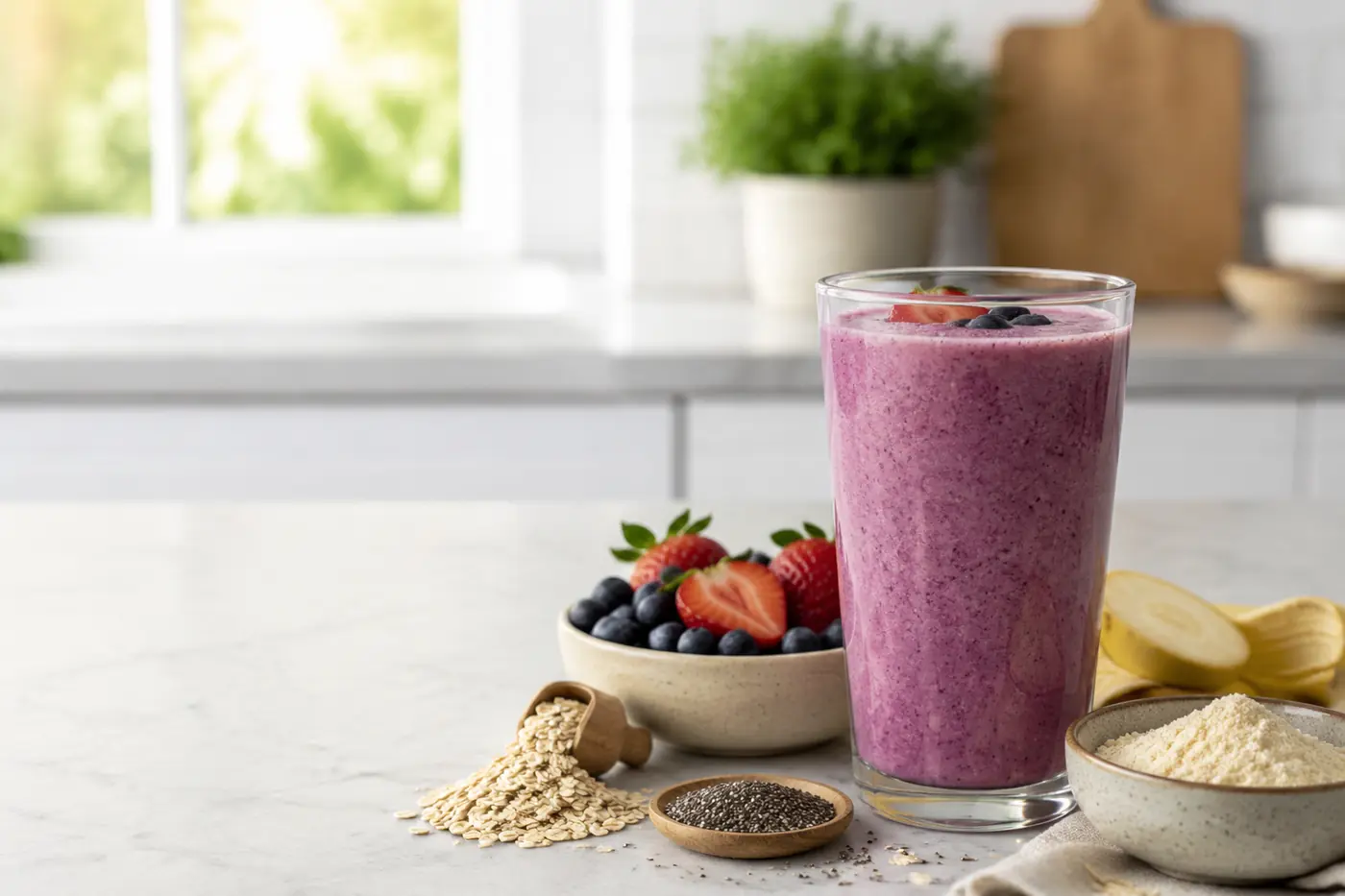
Is a Protein Shake Good for Breakfast? Benefits, Downsides & Recipe
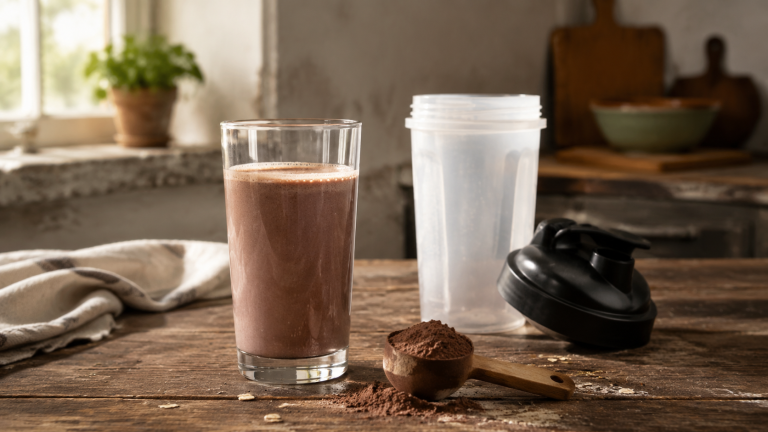
Is a protein shake good for breakfast? Yes, especially when you need something quick or would otherwise skip the meal. But protein powder mixed with water is usually a supplement, not a complete breakfast. To make it more balanced and filling, include a source of fiber, produce, healthy fat and depending on your needs carbohydrate.
The best choice depends on what the shake replaces. A balanced shake is generally more nutritious than a pastry or sugary coffee, but a plain scoop of powder may offer less fiber and variety than a breakfast made with whole foods.
When Is a Protein Shake a Good Breakfast?
A breakfast protein shake can make sense when
- You have limited time in the morning.
- You struggle to include protein at breakfast.
- You exercise in the morning and want a convenient meal afterward.
- You have a reduced appetite but tolerate liquids well.
- You can build the shake with more than protein powder and water.
A shake is less likely to work as a complete breakfast if it contains very few calories, no fiber and no source of fat or carbohydrate. It may also be a poor fit if liquid meals do not keep you satisfied.
A quick comparison
| Breakfast option | Protein | Fiber and produce | Convenience | Overall assessment |
|---|---|---|---|---|
| Protein powder and water | Usually high | Usually very low | Excellent | Useful supplement, incomplete meal |
| Balanced protein shake | High | Can be high | Excellent | Good breakfast option |
| Sugary coffee or pastry | Usually low | Usually low | Excellent | Less balanced choice |
| Eggs, whole-grain toast and fruit | High | Moderate to high | Moderate | Balanced whole-food breakfast |
| Greek yogurt, berries, oats and nuts | High | High | Good | Balanced whole-food breakfast |
No single breakfast is automatically best for everyone. Your calorie needs, activity level, health conditions, preferences and the rest of your diet all matter.
Protein Shake vs. Meal-Replacement Shake
These products are not necessarily interchangeable.
A protein shake is designed mainly to provide protein. A serving may contain roughly 20–30 grams, but the exact calories, carbohydrates, fats, fiber, vitamins and minerals vary by product.
A meal-replacement shake is formulated to provide a broader mix of nutrients and usually contains more calories, carbohydrates, fat, fiber, vitamins and minerals. Even so, formulations differ, so check the Nutrition Facts or Supplement Facts label rather than relying on the product name.
If your powder supplies protein but little else, the ingredients you add determine whether the finished shake functions as a meal.
Benefits of Having a Protein Shake for Breakfast
1. It is quick and portable
A shake can be prepared in minutes and taken to work, school or the gym. That convenience may help people who would otherwise miss breakfast or rely on a less balanced option.
2. It can add meaningful protein to the morning
Protein supports the maintenance and repair of body tissues. It can also contribute to fullness. The FDA’s Daily Value for protein is 50 grams for adults and children age four and older, based on a 2,000-calorie diet, but individual requirements vary with body size, age, activity, pregnancy and health status.
Some research has examined whether distributing protein more evenly across meals may support muscle-related outcomes. The evidence is promising but not conclusive enough to make a fixed “30 grams at every meal” rule for everyone. What matters most is meeting an appropriate total daily intake.
3. It can be customized
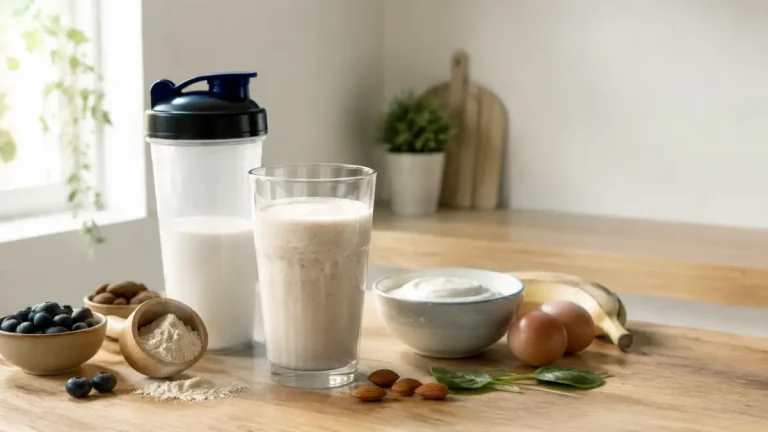
A shake can accommodate many preferences. Whey, casein, soy, pea and blended plant proteins are common options. Fruit, oats, yogurt, seeds and nut butter can change the flavor and nutrient profile.
People with a milk allergy must avoid milk-derived proteins such as whey and casein. Lactose intolerance is different from milk allergy; tolerance to individual products varies.
4. It may be useful around morning workouts
A shake is a convenient way to consume protein after training. However, you do not need to drink it immediately after the final repetition. A meta-analysis found that total protein intake was a stronger predictor of muscle gains than a narrowly timed pre- or post-workout serving.
If the workout is long or intense, adding a carbohydrate source such as banana, oats or dairy milk may make the shake more suitable than protein powder alone.

Possible Downsides
A plain shake may lack fiber
Protein powder mixed with water often contains little or no fiber. The FDA Daily Value for fiber is 28 grams on a 2,000-calorie diet. Fruit, oats, chia seeds and ground flaxseed can help add fiber, although exact amounts depend on the serving and brand.
Increase fiber gradually and drink enough fluid if your usual intake is low. A sudden large increase can cause digestive discomfort in some people.
Liquid breakfasts may feel less filling for some people
Research comparing food textures suggests that solid and semisolid foods can suppress hunger more than liquids, although results vary and studies do not show a consistent reduction in later calorie intake. A thicker shake with oats, yogurt, seeds or frozen fruit may be more satisfying than a thin drink, but individual responses differ.
Calories and added sugar can climb quickly
A shake can become much more energy-dense when it contains large portions of nut butter, sweetened milk, juice, honey and multiple servings of fruit. That is not automatically bad some people need more energy but it may not match a person’s goal.
Use the product label and measure calorie-dense ingredients if energy intake matters to you.
Protein powders are regulated differently from conventional foods and drugs
In the United States, the FDA regulates dietary supplements, but it does not approve them for safety and effectiveness before they are marketed. Manufacturers and distributors are responsible for meeting applicable safety and labeling requirements, and the FDA can act against adulterated or misbranded products after they reach the market.
When choosing a powder, look for:
- A clearly disclosed ingredient list
- Protein and serving size that match your needs
- Added sugar that fits your overall diet
- Allergen information
- Independent certification from an established testing program, when available
Third-party certification can verify specific quality or sport-related standards, but it does not prove that a product will deliver every advertised health benefit.
How to Make a Protein Shake a Balanced Breakfast
Use this flexible formula rather than treating every ingredient as mandatory.
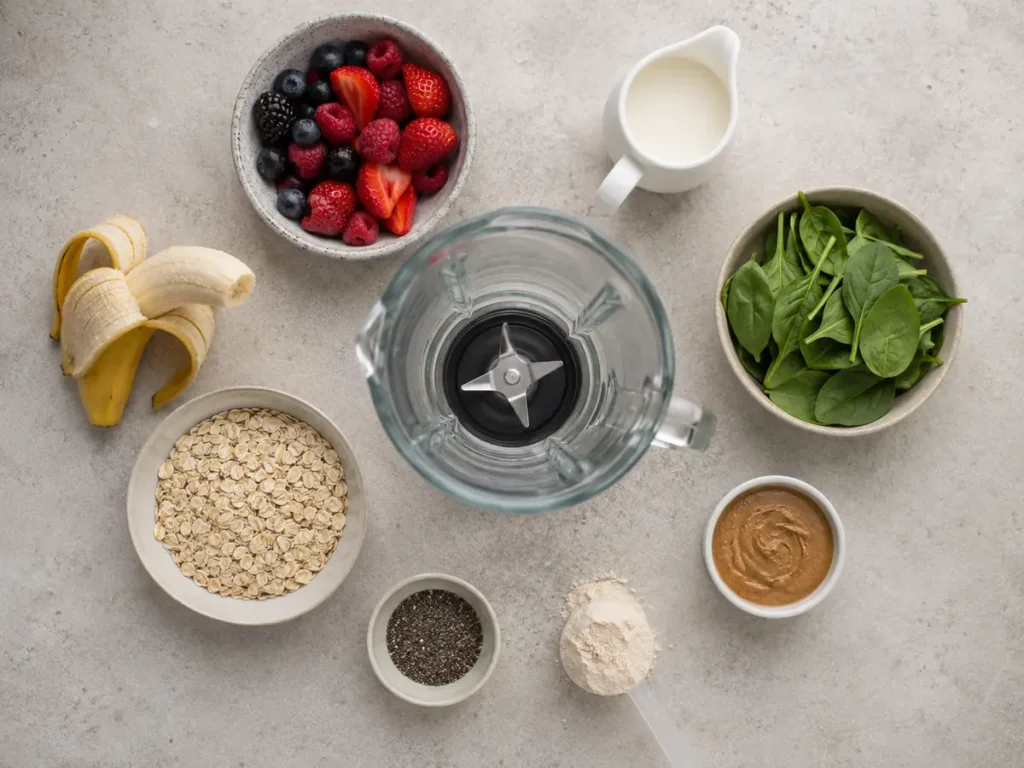
1. Choose a protein source
Examples include:
- Whey or casein protein
- Soy protein
- Pea protein
- A blended plant protein
- Greek yogurt or cottage cheese
Check the label because protein content varies. Many people choose a serving that provides about 20–30 grams, but the right amount depends on total daily needs and what else is in the meal.
2. Add fiber and produce
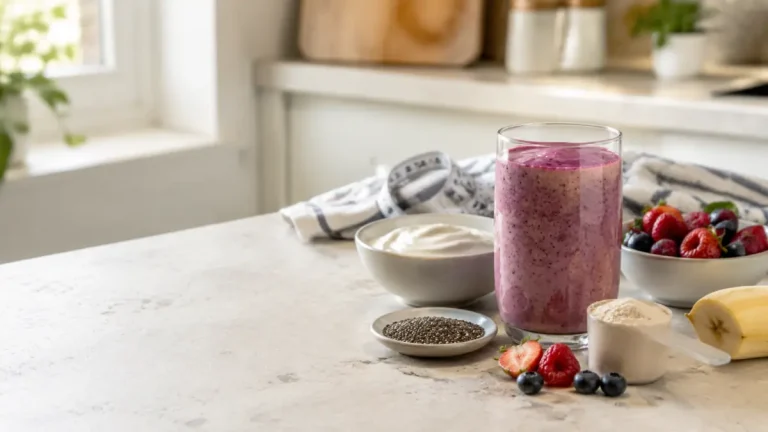
Try one or more of the following
- Berries
- Banana
- Spinach or kale
- Oats
- Chia seeds
- Ground flaxseed
Whole fruit generally provides fiber that juice lacks. Frozen fruit also makes the shake thicker.
3. Add a source of fat if desired
Options include nut butter, chia seeds, flaxseed, avocado or nuts. A small portion can add flavor and energy. Larger portions may be appropriate for people trying to increase calorie intake.
4. Select a liquid
- Water: lowest-calorie option
- Dairy milk: adds protein, carbohydrate and several micronutrients
- Fortified soy milk: a higher-protein nondairy option
- Other plant milks: nutrition varies considerably by type and brand
Check for added sugar and fortification when comparing nondairy beverages.
Easy Breakfast Protein Shake Recipe
If you are new to blending shakes, see our complete guide on how to make a protein shake.
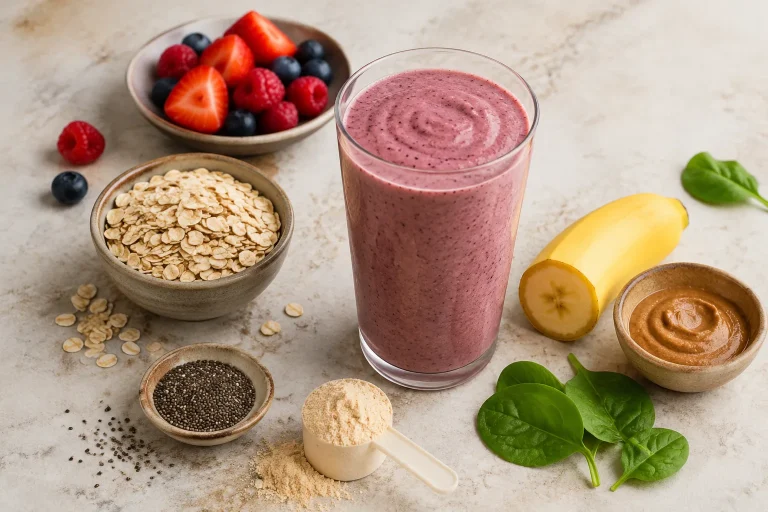
Berry-Oat Breakfast Shake
Ingredients
- 1 serving vanilla protein powder
- 1 cup milk or fortified soy milk
- 1 cup frozen mixed berries
- 1/4 cup rolled oats
- 1 tablespoon chia seeds
- Ice or water to adjust consistency
Directions
- Add all ingredients to a blender.
- Blend until smooth.
- Add water or ice until it reaches your preferred consistency.
- Check the nutrition labels of your exact ingredients if you need precise calories or macronutrients.
This recipe combines protein with fruit, whole-grain carbohydrate and seeds. Its exact nutrition cannot be stated accurately without the brands and serving sizes used.
Lower-calorie variation
Use water or an unsweetened lower-calorie milk alternative, reduce the oats and keep the berries. Make sure the finished breakfast still provides enough energy for your needs.
Higher-calorie variation
Use dairy or soy milk and add banana, more oats or nut butter. This version may suit people with higher energy needs.
Is a Protein Shake for Breakfast Good for Weight Loss?
It can fit a weight-loss plan, but the shake itself does not cause fat loss. Body weight changes depend on total energy intake over time, while food quality, activity, sleep, medication and health conditions can also influence results.
A protein shake may help if it replaces a higher-calorie breakfast and keeps you satisfied. It may work against that goal if calorie-dense ingredients turn it into an additional meal rather than a replacement.
Avoid judging a shake by whether it is labeled “healthy,” “clean” or “weight loss.” Compare its ingredients and nutrition information with your actual needs.
Learn more about how protein shakes may fit into a weight-loss plan
Is It OK to Drink a Protein Shake Every Morning?
For many healthy adults, a daily breakfast shake can be part of a varied diet. It should not crowd out fruits, vegetables, whole grains and other nutrient-dense foods throughout the day.
Get individualized advice before substantially increasing protein intake if you
- Have kidney disease or have been told to limit protein
- Have diabetes and use medication that can cause low blood sugar
- Are pregnant or breastfeeding
- Have food allergies or a gastrointestinal condition
- Are preparing shakes for a child or teenager
- Have a history of disordered eating
A physician or registered dietitian can help determine an appropriate pattern.
Frequently Asked Questions
Can I drink only a protein shake for breakfast?
Yes, but a shake made only with protein powder and water may not provide enough energy, fiber or variety to function as a complete meal. Add fruit, oats, seeds, yogurt or another appropriate food if you need a more balanced breakfast.
Is a protein shake better than eggs for breakfast?
Neither is universally better. Eggs are a whole-food source of protein and several micronutrients. A shake may be more convenient and easier to customize with fruit and fiber. Choose based on your overall diet, needs and preferences.
Can I have a protein shake on an empty stomach?
Many people can, but tolerance varies. Lactose, sugar alcohols, gums, large fiber servings and certain sweeteners may cause symptoms in some individuals. Review the ingredients and adjust the portion if discomfort occurs.
Should I use milk or water?
Water keeps the drink lighter. Dairy milk or fortified soy milk adds protein, carbohydrate and micronutrients. Other plant milks vary, so compare labels.
Can I put protein powder in coffee?
Yes, if the product’s directions allow it. Protein powder can clump in hot coffee, so first mix it with a small amount of cool liquid and then add the coffee gradually. Protein coffee alone still may not provide the fiber and energy of a complete breakfast.
What is the best protein powder for breakfast?
There is no single best powder. Select one that suits your allergies, dietary pattern, budget and protein needs. Prefer transparent labeling and consider reputable independent certification.
The Bottom Line
A protein shake can be a healthy breakfast when it does more than deliver protein. For a more complete meal, combine protein with fruit or vegetables, a fiber-rich ingredient and enough energy for your morning. A plain powder-and-water shake is convenient, but it is better viewed as a supplement unless the rest of your diet supplies what it leaves out.
Sources
This article provides general educational information and is not individualized medical or nutrition advice.